Searching for pixelspinx com usually means you want a plain answer. What is this site, can you trust it, and is it worth your time? Online descriptions disagree. Some call it a creator platform, others a gaming site, and others a general information hub. This review separates what a visitor can observe from what is claimed without proof.
You will learn what the website covers, how its navigation and content strategy work, who may benefit, how it gets found in search, and where its limits lie. You will also get a clear view of safety, legitimacy, and credibility, so you can decide how much weight to give what you read there.
pixelspinx com at a Glance: What It Actually Is
Based on what a visitor can see, the pixelspinx com website is a multi-topic content site. It publishes articles across several unrelated subjects instead of focusing on one niche. It appears to run on WordPress, a popular system for building blogs and news sites. It shows display advertising, and you can read it without creating an account.
Its own pages describe it as an online information platform meant to educate and inform readers. That is plausible, but it is a self-description, not independent proof. A site can call itself anything. What matters is what you can check.
The facts that appear reasonably steady are:
- It is live and publishing articles.
- It is free to browse.
- It uses a category-based layout.
- It shows no sign-up or login for readers.
Several basic questions remain open, and a careful reader should keep them in mind:
- Who owns or runs the site?
- Is there a named editorial team, or is publishing automated or outsourced?
- How long has the site been active? No independently verified founding date turned up.
- Is “informational website” the full picture, or only the latest label it has used?
So the safest summary is this. pixelspinx com explained in one line is a real, live, ad-supported, multi-topic content site. Anything more specific, such as “trusted knowledge hub,” “specialist resource,” or “creator network,” goes beyond the evidence. Treat those labels as claims until proven.
What Does pixelspinx com Cover?
When people ask what pixelspinx com covers, the answer is “a lot of different things.” Descriptions from several independent sources line up on a handful of categories.
| Category | Typical Topics |
| Technology | Software, apps, general tech explainers |
| Business and finance | Budgeting, financial planning basics, small business ideas |
| Gaming | General gaming content |
| Lifestyle | Travel, home, everyday topics |
| Health | General wellness content |
The table shows a wide spread. Breadth like this tells you something about the site’s goals. Covering five or six unrelated areas is common for ad-supported content sites built around search traffic. It is a different approach from a specialist publication that builds a reputation in one field. Wide coverage is not a sign of deep expertise in any single area.
Think of it like a general store compared with a specialist shop. The general store has something for everyone, but you would not expect the same advice on a rare tool that a specialist could give. A site that handles gaming, finance, and health in the same library is tuned for reach. That does not make the writing bad. It simply means you should read it as general-interest content, not as expert analysis.
For readers, the practical point is to match the topic to the stakes. For a casual question about an app or a travel idea, a broad site may be enough. For decisions about money or health, you need sources that show who wrote them and what qualifies them. That idea returns later in this guide, when we look at business and finance readers.
Is pixelspinx com a “Creator Platform”? Setting the Record Straight
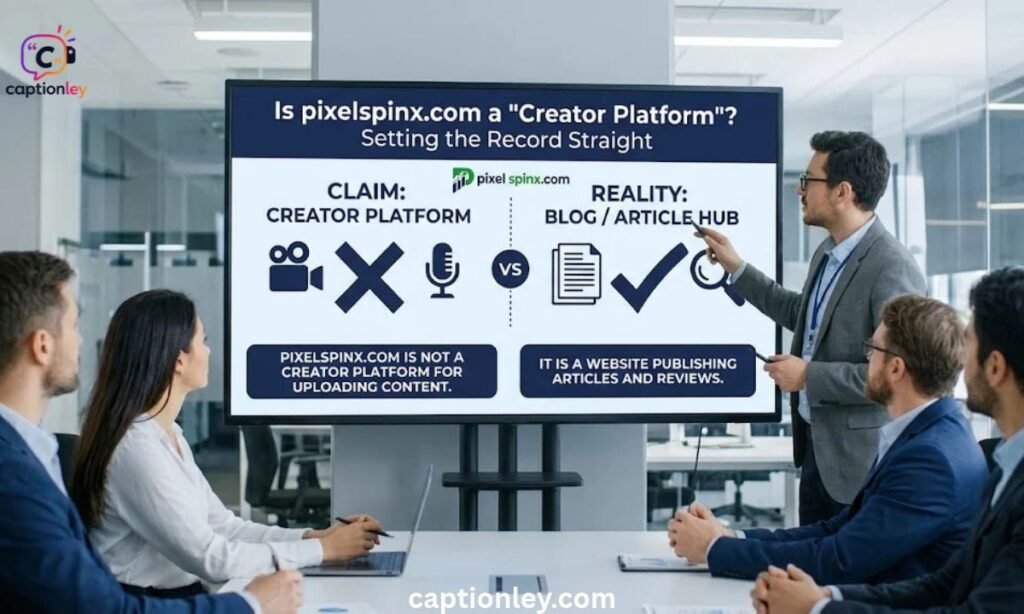
This question causes the most confusion around the topic. A handful of articles describe the site as a creator-economy platform, similar to Substack, a service where writers publish newsletters, or Patreon, a service where fans pay creators directly. If that were true, the site would be a very different kind of place.
A genuine creator platform normally offers a clear set of features:
- A sign-up flow so outside writers can publish their own work
- A creator dashboard to manage posts
- Tools to build an audience, such as subscriptions or email lists
- A way to earn money, such as paid memberships, tips, or revenue sharing
Based on what is currently visible, none of these appear on the site. There is no public sign-up for publishing, no creator dashboard, and no subscription or payment system for contributors. What a visitor sees is a standard reader-facing layout with category pages, article lists, and content published under the site’s own name instead of a roster of independent creators.
So why do some write-ups call it a creator platform? The likeliest explanation is not a hidden feature. A cluster of near-identical explainer posts about this domain appeared across unrelated blogs in 2026, many with templated wording. That pattern fits generic content written about an unfamiliar site far better than it fits anyone testing real features.
On current evidence, the pixelspinx com creator platform claim is unsupported. The site works as a publisher you read, not a platform you publish on. That could change, so check the site yourself if this matters to you.
The User Experience: What Visiting pixelspinx com Actually Feels Like
The pixelspinx com user experience is that of a typical blog. Nothing about it is surprising, and that is mostly a good thing. Familiar layouts let readers find what they want without learning anything new.
User experience, often shortened to UX, simply means how easy and pleasant a site is to use. It covers menus, page speed, readability, and how many interruptions you meet. Some of these points are subjective and can change from week to week. Ads, pop-ups, and loading speed often vary by device, browser, and location. So treat any single description of the reader experience, including this one, as a snapshot and not a promise.
Two parts matter most: how you move around the site, and what you cannot find there. The next two sections look at each.
Navigation and Layout
The site uses a category-based structure. A top menu lists the main topics, and article lists sit under each one. Anyone who has used a WordPress blog or a news-style site will feel at home. This kind of website navigation and layout supports content discovery, because a reader can browse by subject without a search box or special knowledge.
The site is also responsive. That means pages resize to fit phone and tablet screens, so you do not need to pinch and zoom around a desktop design. For many readers today, this is the most important layout feature, since a large share of browsing happens on phones.
Good navigation usually shows up in a few simple ways:
- Clear category names that match what you find inside
- Article lists that show titles and dates
- A layout that stays readable on small screens
- Few barriers between you and the text
Beyond this, confident claims are hard to make. Statements about page speed or ad intrusion depend on your device and connection. Visit the site directly and judge for yourself.
What’s Missing
Some features that readers often expect appear to be absent, based on available observation:
- No visible way to create an account or submit content
- No clearly displayed author bios or writer credentials
- No easily found About or contact page explaining who runs the site
- No dedicated mobile app at the time of the latest check
- No community tools such as comments, saved lists, or ratings
None of these gaps is unusual for a smaller content site. Together, though, they leave a reader with little way to verify who wrote what. That matters more for some topics than others. A lifestyle tip with a small risk is one thing. A claim about investing or health is another. When there is no named author and no stated sources, the burden of checking falls on you.
The Real Content Strategy Behind pixelspinx com

A website content strategy is the plan behind what a site publishes, how it organizes it, and who it wants to reach. Nobody outside the site knows how its editorial choices are really made, so this section is analysis of visible patterns. It is not inside knowledge.
The visible patterns are fairly clear. Titles read like direct answers to specific search questions. Headings follow a logical, scannable order. Topics span technology, finance, gaming, lifestyle, and health. Together, these choices suggest a plan built around being found in search, with reader value as the second step. Many sites on the ad-supported web work this way, and it is not a flaw by itself.
The pixelspinx com content strategy can be summed up with a short table.
| Pattern Observed | What It Likely Aims For |
| Question-style titles | Matching specific search queries |
| Clear heading structure | Easy scanning and better snippets |
| Wide topic range | Capturing many different searches |
| Plain, short writing | Reaching general readers |
The table explains how each visible trait supports one goal: attracting readers who type narrow questions into a search engine. It does not prove the content is weak or strong. Plenty of search-driven content is genuinely useful, and plenty is thin. The only way to know is to read the specific article you need.
The three sections below look at the search-first approach, the writing style, and how often the site seems to publish.
SEO-First, Reader-Friendly Second
SEO stands for search engine optimization, the practice of shaping pages so search engines can find and rank them. The pixelspinx com SEO strategy appears to follow a common recipe. Write many pages, give each a clear question or topic, and cover a broad range of subjects to catch many long-tail searches. Long-tail searches are long, specific phrases such as “how to plan a monthly budget for beginners.”
This approach is not hidden or shady. It is a practical way to get discovered. The risk lies in what happens after the click. A page can match a search perfectly and still offer only surface-level help. Good SEO content satisfies the question behind the search, not only the words in it.
For readers, the lesson is simple. A page that ranks well matched the algorithm. It has not necessarily been checked for accuracy.
Writing Style and Accessibility
The pixelspinx com writing style is plain and easy to follow. Sentences are short, jargon is rare, and headings make articles easy to skim. For a general reader with no background in finance or technology, this is a real strength. You do not need special vocabulary to follow along.
Website accessibility is a related idea. It means how easily different people can use a site, including people with disabilities or older devices. Plain language is one part of that. Others include readable text size, good color contrast, and layouts that work with screen readers. This review cannot confirm the full accessibility of the site, so treat it as unchecked.
It also helps to separate readability from depth. Easy words do not equal complete or expert content. Accessible language is a style choice. Accuracy and thoroughness are separate questions.
Publishing Cadence
Publishing cadence means how often a site posts new content. There is no reliable, independently verified data on this for the site. It has clearly published across many categories over time, but claims about daily or weekly posting cannot be confirmed without direct access to its dated archives.
If freshness matters to you, check the dates on category pages yourself. Look at the newest posts, then at the gaps between them. A steady rhythm suggests active care. Long gaps suggest the opposite. Do not rely on a secondhand number, including any you read elsewhere about this site.
Who Actually Benefits From pixelspinx com?

Fit matters more than reputation. A site can be useful to one reader and a poor match for another. The people most likely to find value are those who want quick, plain-language information and who treat it as a starting point.
Here is a simple way to think about it. Ask what you plan to do with the information. If you will use it to satisfy curiosity, the stakes are low. If you will use it to spend money, change your health habits, or make a technical purchase, the stakes are higher, and your standard for evidence should rise with them.
The table below shows how fit changes by reader type.
| Reader Type | Fit | Main Caution |
| Casual information seekers | Good | Depth is limited |
| Business and finance readers | Use carefully | No visible author credentials |
| Tech and gaming fans | Reasonable for background reading | Not a specialist test source |
The table is a guide, not a ruling. It shows that the same site can be a decent first stop and a poor final authority. The three groups below explain each case.
Casual Information Seekers
If you want a quick overview of a topic, written in plain language and without needing background knowledge, the site’s structure suits you. It reads like a place you land on for a fast answer, not for deep research. That is a legitimate and common use.
Casual online information seekers also benefit from the free access. There is no login and no paywall visible, so you can read and leave. A good habit is to use what you learn as a launch point. Note the key terms, then confirm important details elsewhere.
Business and Finance Readers
This group needs the most care. General multi-topic sites that cover business and finance content are best treated as introductory reading. Nothing about the finance articles has been independently verified for accuracy, and no visible author credentials show who wrote them or what expertise they hold.
If you read about budgeting, investing, or small-business topics there, use it to build vocabulary and basic understanding. Before acting, compare key claims with a licensed professional or an established source that names its authors and shows its sources. Money decisions deserve evidence you can trace.
Tech and Gaming Enthusiasts
Technology and gaming content on a broad site works best as general-interest reading. If you are comparing products or need technical depth, a dedicated outlet with visible testing methods and named reviewers will serve you better. Good review sites show how they tested, what they measured, and who did the work.
As background on a topic you are casually curious about, the site is a reasonable fit. Just do not treat it as a lab. A passing explainer about a game or app is not the same as a tested, hands-on review.
pixelspinx com and SEO: How It Gets Found
If you reached the site through a search engine, you may wonder how a site without a famous name shows up. The answer lies in how search works. Search engines match content to a query. They do not only favor well-known publishers. That is the core of how pixelspinx com gets found online.
A site that covers many topics with clear, question-answering pages can match a large number of narrow searches. Each article becomes a small doorway. With many doorways, the site collects visitors from many directions. That is a mechanical result of structure and indexing. It is not proof of expertise.
Several factors shape search visibility for any site:
- Relevance: how closely a page matches the words and meaning of the query.
- Content quality: how complete, clear, and useful the page is.
- Links from other sites: a signal that others find the page worth citing.
- Technical health: speed, mobile friendliness, and secure connections.
- Freshness: whether the page is current for topics that change.
Search engine rankings reflect these signals and many more. They also change often. A high position today may fall next month. So when an unfamiliar site shows up near the top of your results, keep two ideas apart. Ranking means the page matched what the algorithm looked for. It does not mean the source has been reviewed or proven reliable.
This is also why the site can be a useful study example for SEO learners. It shows how titles, headings, and categories can be shaped to capture search traffic. It does not replace real SEO tools that report actual rankings, traffic, and backlinks.
Is pixelspinx com Safe and Legitimate?
Most readers come here for this answer, so it deserves more than a yes or no. Safety, legitimacy, and credibility are three separate questions, and each has a different answer.
Website safety. The site uses HTTPS, which means the connection between your browser and the site is encrypted. You can spot it by the padlock icon and the https address. At the time of the latest check, no major browser warning flagged the site. Still, status can change, so if safety is a real concern, check the current state yourself. HTTPS protects data in transit. It does not prove the owner is honest.
Website legitimacy. The site is operating and publishing, which shows it is a working domain and not an abandoned one. Where it falls short is openness. There is no visible owner, no named editorial team, and no easy-to-find About or contact page. That is common among smaller content sites and is not an automatic red flag. But it means any claim that the site is fully transparent does not hold up.
Website credibility. Bylines and credentials are not clearly shown, and articles do not appear to cite outside sources. For general reading, that is a small limit. For finance or health topics, it means you should verify claims elsewhere.
Practical habits help on any ad-supported site:
- Do not enter personal or payment details on an article page.
- Close pop-ups with their visible close button, not by clicking inside them.
- Be doubtful of ads that promise unrealistic rewards.
- Do not download files you did not ask for.
Overall view: the evidence points to a technically safe-to-browse site that has not shown the ownership or editorial openness needed to count as an authority. “Totally safe, trust everything” does not fit. Neither does “likely a scam.” The honest middle asks you to do a little checking of your own.
Honest Limitations Worth Knowing
Every site has limits, and naming them is a sign of respect for the reader. The main website limitations here are:
- Breadth over depth. Covering tech, finance, gaming, health, and lifestyle in one place makes it unlikely to match a specialist source.
- Thin author transparency. Articles do not generally show who wrote them or why they are qualified.
- Undisclosed ownership. No verified information shows who operates the site.
- No creator or community tools. You can read the site, but you cannot publish, comment, or build a profile.
- Limited track record. Little independent, credible coverage exists. Much of what appears online is the same kind of unverified explainer content.
It is useful to sort these limits into two kinds. Some are confirmed by looking at the site, such as the lack of visible author names and the missing About page. Others are reasons for caution and not proven problems. For example, hidden ownership does not prove wrongdoing. It is simply a good reason to double-check claims that touch your money or health.
You can turn these limits into a short checklist before relying on any article from the site:
- Is there a named author or editor?
- Does the article mention where its facts come from?
- Is the publish date recent enough for the topic?
- Do two or more trusted sources agree?
- Would a wrong answer cause real harm?
If you answer “no” to the first four and “yes” to the last, step away and use a stronger source. This approach keeps the site useful for what it does well while protecting you from what it cannot show.
Why People Are Searching “pixelspinx com” in 2026
Searching for an unfamiliar domain by name is a normal habit. It often happens after you meet a link in a search result, a shared post, or a backlink, and want to sanity-check it before going further. This is true for any lesser-known site and is not unique to this one.
Several forces appear to push people toward this particular search:
- The wish for a direct answer to “what actually is this site?”
- The need to check safety or legitimacy before reading or sharing a link
- Confusion from conflicting descriptions elsewhere, including the creator-platform claims covered earlier
- General curiosity about its topics
The last point deserves a closer look. When many near-identical articles describe one domain in different ways, readers feel unsure who to believe. Each new copy adds noise and no new facts. That is why checking what is observable matters more than repeating what others say.
If you are one of those searchers, the practical steps are simple. Visit the site with care. Read its category pages and a few articles. Look for dates, authors, and sources. Compare any key claim with a second source. A few minutes of this tells you more than a dozen secondhand summaries.
Frequently Asked Questions
Is pixelspinx com Free to Use?
Yes, based on current observation. The site is free to browse, supported by advertising, and does not require an account to read.
Can I Publish My Own Content on pixelspinx com?
Not from what is visible today. There is no public sign-up or submission process for outside writers. See the creator platform section above for details.
What Topics Does pixelspinx com Cover?
It covers technology, business and finance, gaming, lifestyle, and health, among other general-interest subjects.
Is pixelspinx com a Creator Platform Like Patreon or Substack?
No, based on current evidence. It works as a reader-facing publisher, not a place where outside creators sign up, publish, and earn money.
Who Runs pixelspinx com?
This is not publicly disclosed or independently verifiable right now. That is not unusual for smaller content sites, but it is a real transparency gap.
Does pixelspinx com Have an App?
No dedicated app was found at the latest check. The site is mobile-responsive, so it works in a phone browser.
Is pixelspinx com Good for SEO Research?
It can serve as an example of how a multi-topic site shapes titles and categories to attract search traffic. It cannot replace dedicated SEO tools that report real ranking, traffic, and backlink data.
Conclusion
pixelspinx com is a real, live, multi-topic content website that appears to run on WordPress, carries ads, and is free to browse. It is not a confirmed creator or publishing platform in the Substack or Patreon sense, and nothing visible supports that description, whatever other articles claim.
It works well for casual, general-interest reading, such as a quick overview of a topic in plain language. It is a weaker fit for specialist depth, especially on finance or health, where missing author credentials and sources mean you should verify anything important elsewhere.

Maryam is a passionate content writer with 4 years of experience at CaptionK, where she developed engaging and informative content. Currently, she is working at Captionley.com, creating high-quality content that connects with readers and delivers meaningful value.