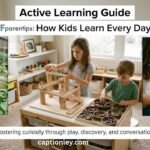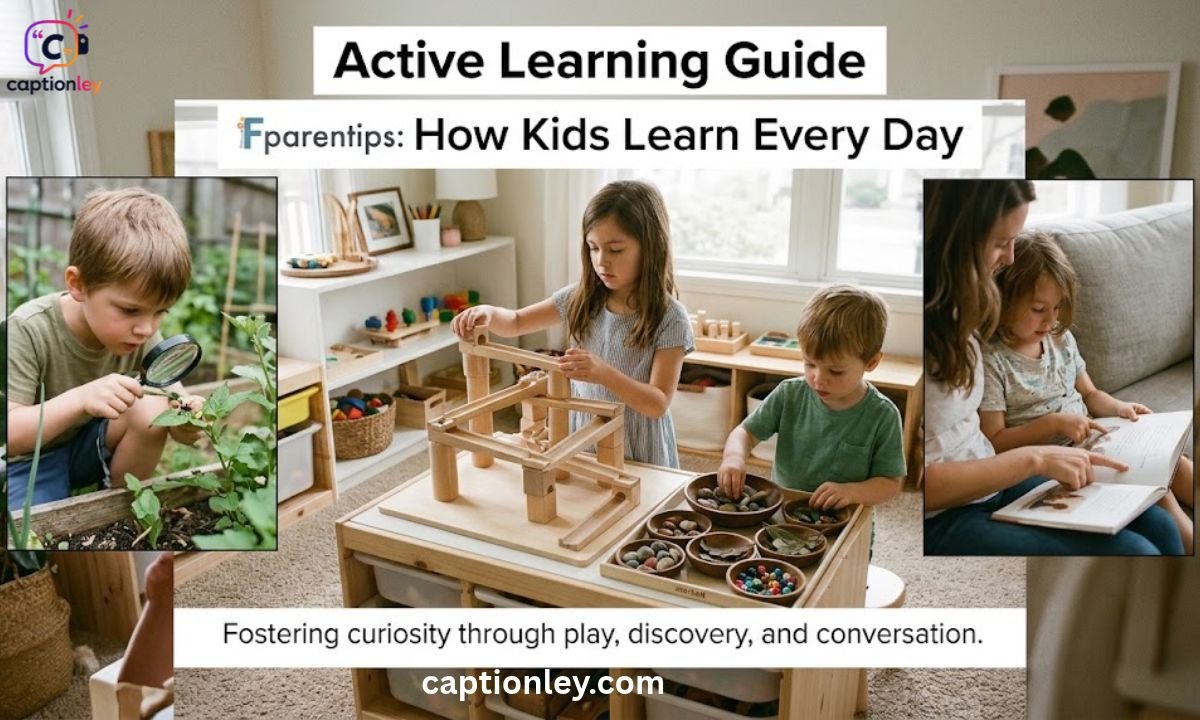
Children learn deeply when they act, test, and talk instead of only listening. The active learning guide fparentips is a parenting article that turns cooking, laundry, block towers, and garden jobs into hands-on lessons for ages 1 to 9. This article explains what active learning means, how parents can guide without taking over, and which activities suit toddlers, preschoolers, and primary-school children.
It also covers safety, productive struggle, screen time, common mistakes, and the limits of the research behind the idea. You will finish with a simple five-step routine and a clear and honest view of how far this parenting resource can be trusted for everyday family use at home.
Quick Facts
Before going deeper, it helps to see the basic details of the Fparentips active learning approach in one place. The table below summarises the source article so you know what it covers and who stands behind it.
| Fact | Details |
| Topic | Active learning at home |
| Website | Fparentips.com |
| Article author | Selvian Velmyre |
| Category | Family Bonding Ideas |
| Main idea | Children learn through active participation |
| Parent role | Ask, support, observe, and guide |
| Age groups | 1–3, 3–5, and 6–9 years |
| Example activities | Sorting, baking, building, planting, measuring |
| Materials | Mostly everyday household and play items |
| Main focus | Curiosity, thinking, problem solving, and participation |
This snapshot shows that the Fparentips learning guide for parents is built around low-cost, home-based learning activities. It does not rely on special kits, apps, or classroom space. Selvian Velmyre, the credited author, writes for families who want practical ideas rather than academic theory. Keep this in mind as you read, because it shapes both the strengths and the limits of the advice.
Key Takeaways
The article’s main lessons can be compressed into a short list. Read these points first if you only have a minute, then return to the sections that interest you most.
- Active learning means children do something with information, instead of only hearing it.
- Normal home routines can become everyday learning activities without extra planning.
- Parents work best as guides who ask questions before giving answers.
- Activities can be adjusted for toddlers, preschoolers, and school-age children.
- Open-ended materials support creativity and problem solving.
- Research supports active learning, but not every study applies directly to young children.
- Fparentips is a useful parenting resource, not a medical or academic authority.
Together, these points form a simple child-centered learning approach. The child acts, the parent supports, and the home provides the materials.
What Is Active Learning Guide Fparentips?
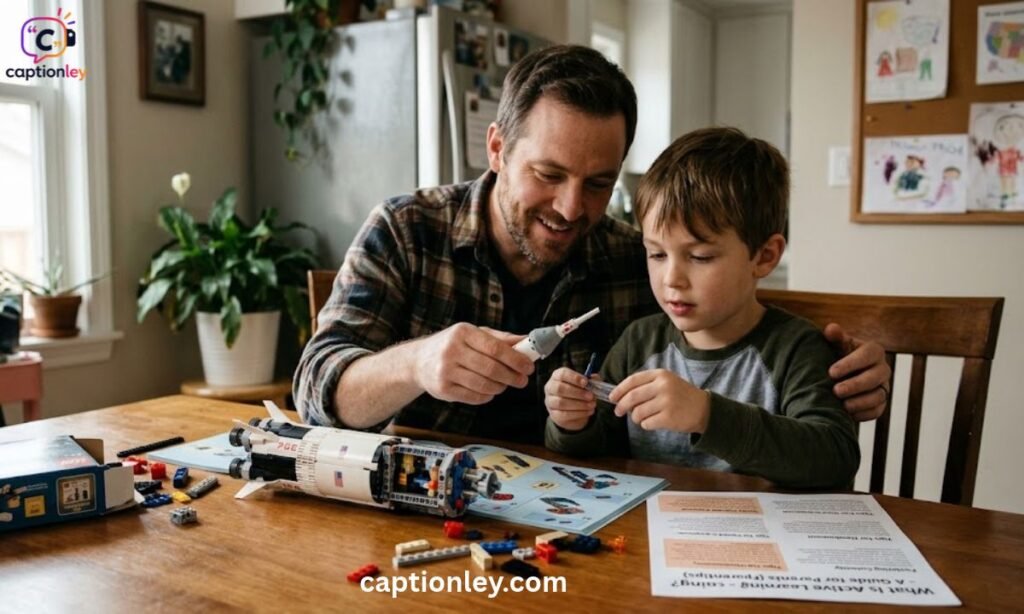
The active learning guide Fparentips is a parenting article about helping children learn by taking part instead of simply receiving information. A child might build, measure, compare, ask, predict, test, and then try again. In plain terms, that is active learning for kids.
The guide focuses heavily on the home. Parents do not need a classroom, a formal timetable, or costly learning equipment. Ordinary life becomes the lesson. Cooking can teach measurement. Laundry can teach sorting. A walk can teach directions. Building with blocks can teach balance.
This focus makes the idea practical for busy families. Many parenting resources suggest adding new tasks to an already full day. The Fparentips active learning approach does the opposite. It asks parents to look at tasks they already do and find the thinking inside them. A parent making dinner does not need to stop and teach a lesson. They can hand the child a spoon, ask a question, and let the child work something out.
Because the article sits in the Family Bonding Ideas category on its website, it also treats learning as a shared family activity. The goal is not only knowledge but also time spent together, which supports healthy child development and stronger relationships.
What Does Active Learning Mean?
Active learning means the learner takes an active role in the learning process. Instead of only listening, children interact with the task. They may solve a problem, make a choice, explain an answer, test an idea, or ask why something happened.
Educators often link this idea to experiential learning, which is learning that comes from direct experience and reflection. A child who pours water between cups learns about volume in a way that a picture of a cup cannot match. The experience stays in memory because the child felt, saw, and controlled it.
Passive learning still has value. Listening to a story, watching a short video, or hearing an explanation can all teach useful things. The difference is depth. When children handle materials and make decisions, they usually think harder about what they are doing.
Three habits mark active, hands-on learning for kids:
- The child makes choices instead of only following instructions.
- The child tests ideas and sees real results.
- The child explains or discusses what happened.
These habits build early critical thinking. A child who guesses, checks, and explains is practising the same steps that scientists and engineers use. The activities look like play, yet the thinking underneath is serious and valuable for long-term cognitive development.
Why Is Active Learning Important?
Active learning matters because it increases participation and makes children think about information instead of just hearing it. It also gives parents a clearer picture of how a child reasons, which helps them choose the next activity wisely.
Research backs the general method. A major 2014 study in the journal Proceedings of the National Academy of Sciences, often shortened to PNAS, reviewed 225 earlier studies of undergraduate science, technology, engineering, and maths courses. Students taught through active learning scored higher on exams and concept tests. Students in traditional lectures were more likely to fail, with average failure rates of roughly 34 percent in lecture classes compared with about 22 percent in active classes.
There is one important limit. Those participants were university students, not toddlers or young children learning at home. The study supports active learning as an educational method, but parents should not assume the same numbers apply to every home activity.
| What the research shows | What it does not show |
| Active methods beat lectures in university STEM classes | Exact gains for preschoolers |
| Higher exam scores with active teaching | Results from any single home activity |
| Lower failure rates in active classes | Guaranteed outcomes for every child |
The table reminds us that research-backed learning methods should be used with care. The sensible conclusion is that active learning is a well-supported teaching approach, and its core ideas fit what many early childhood experts already recommend. Parents can use it with confidence while staying realistic about results.
How Does Fparentips Use Active Learning at Home?
Fparentips turns ordinary household activities into small learning tasks. The idea is simple: use what is already happening. This is the heart of active learning at home.A parent preparing food can ask a child to count the ingredients. A child building a tower can think about balance. Laundry becomes matching and sorting.
Real tasks work well because children can see the purpose. Measuring flour matters because the cake will not turn out right without it. Matching socks matters because someone needs a pair. When the purpose is clear, children stay interested longer and care more about getting the result right.
Home-based learning activities also fit easily into small time gaps. A five-minute wait for the kettle can become a quick guessing game. A trip to the shop can become a number hunt. Parents do not need to plan these moments in advance. They only need to notice them and ask one good question.
This approach also protects free time. Because the learning sits inside normal routines, children still have space to play without pressure. The result is a balance between guided discovery and unstructured fun, which suits most families much better than a strict study schedule.
What Is the Parent’s Role?
In this approach, parent involvement in learning looks different from traditional teaching. The parent acts more like a guide than an answer machine. Instead of fixing every problem right away, the parent asks the child what they think. This keeps the child’s mind working and shows that their ideas matter.
Parents still help when needed. They step in when something is unsafe, when frustration grows too high, or when the child asks for support. They simply do not need to control every step.
Short questions work best. The guide suggests prompts like these:
- “What do you notice?”
- “What might happen next?”
- “Why did that fall?”
- “What could you change?”
- “What else could you try?”
Each question pushes the child to observe, predict, explain, or improve. You do not need to ask all five at once. One good question is often enough, and then the parent can watch and listen.
A helpful test is to ask yourself, “Is my help keeping my child’s thinking going, or replacing it?” If help replaces thinking, wait a little longer. If the child is stuck and upset, offer a small hint. This kind of parental guidance builds confidence because children learn that they can solve problems with support nearby, not with someone else doing the work for them.
Why Open-Ended Questions Matter
Open-ended questions for kids encourage children to explain their thinking instead of guessing one fixed answer. They create room for conversation, and they show parents how a child sees the world.
Compare two questions. The first is, “Is the block red?” The second is, “What do you notice about these blocks?” The first has one short answer, yes or no. The second can start a long conversation. A child might talk about colour, size, shape, number, weight, or position.
That variety gives parents useful insight. If a child keeps talking about colour, they may be ready for sorting games. If they talk about height, a tower challenge might be a good next step. The answers act as a window into the child’s current understanding.
Parents can turn closed questions into open ones with a few simple changes:
| Closed question | Open-ended version |
| “Is it heavy?” | “How does it feel when you lift it?” |
| “Did it sink?” | “What do you think made it sink?” |
| “Is the tower tall?” | “How could we make it taller?” |
| “Do you like it?” | “What would you change about it?” |
The table shows that open-ended questions often start with “what,” “how,” or “why.” They also welcome unexpected answers, which is where creative thinking begins. Even a silly reply tells the parent something about how the child connects ideas. Give the child time to answer, and avoid finishing their sentences for them.
What Is a Safe Learning Space?
A safe learning space is a place where children can try things without constant interruption, while risks stay under control. Fparentips recommends giving children room to touch, build, move, test, and make mistakes. This does not mean removing rules. A safe learning environment always puts child safety first.
Before any hands-on activity, parents should check for common risks:
- Small objects can be choking hazards for toddlers.
- Water needs adult supervision.
- Cooking equipment needs close adult control.
- Some plants or household items may be unsuitable or harmful.
Once these dangers are removed, children can enjoy much more freedom. They can pour, stack, tap, and explore without hearing “stop” every few seconds. That freedom matters, because constant interruption teaches children to wait for permission instead of thinking for themselves.
A good learning environment does not need to look special. A clear patch of floor, a low table, a tray to catch spills, and a few safe materials are enough. Some parents set aside a small box or shelf that children can reach on their own. This makes it easier for them to start activities without help, which supports independence.
Supervision still matters, especially for children under five. The adult stays close, watches quietly, and steps in when safety requires it. Freedom and safety work together, and a well-prepared space allows both.
Why Open-Ended Materials Work Well
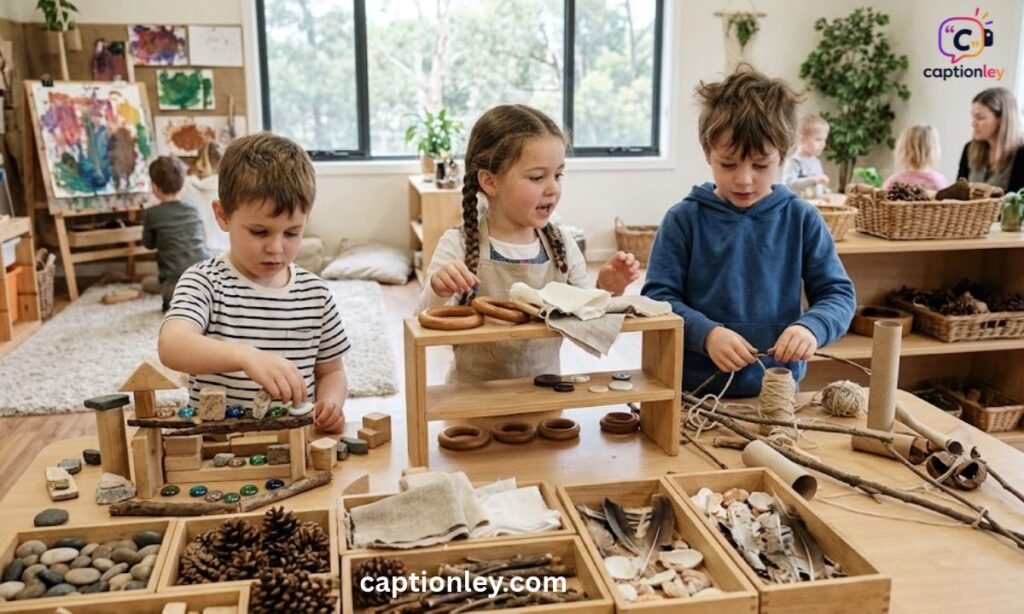
Open-ended materials can be used in many different ways, so the child decides what to make or test. This is the opposite of a toy that does one thing when you press one button. Open-ended learning activities give children ownership of the idea.
Good examples include:
- Blocks
- Cardboard and boxes
- Paper and crayons
- Playdough
- Cups and containers
- Safe natural materials such as leaves or smooth stones
Think about a simple cardboard box. It has no single correct use. It can become a house, a shop, a tunnel, a car, or a storage space. The child brings the idea, and the box follows. That is what makes open-ended materials so useful for play-based learning activities.
These materials also grow with the child. A toddler may stack blocks and knock them down. A preschooler may build an enclosure for toy animals. A seven-year-old may design a bridge with a weight limit. The same set of blocks supports very different thinking at each age.
Open-ended materials are usually cheap, too. Many families already own most of what they need. Parents can collect cardboard tubes, clean containers, fabric scraps, and old magazines. Because these items have no fixed purpose, children are free to use their imagination, and that freedom feeds creative thinking and problem solving at the same time.
Active Learning Ideas for Ages 1–3
Active learning for toddlers works best when it uses movement, touch, repetition, sorting, and simple cause-and-effect games. Toddlers ages 1–3 learn through their senses and their bodies, so activities should be short, safe, and easy to start. Always supervise closely, and remove small objects that could be swallowed.
Sorting Activities
Give your toddler safe objects and invite them to sort by colour or size, or to match pairs. These sorting activities build early maths skills such as grouping and comparing. Keep the number of items small at first, perhaps six or eight, so the task feels achievable.
Pouring Activities
Offer safe cups or containers and let your child fill and empty them. Pouring activities introduce ideas about volume, movement, and control. Expect spills, and treat them as part of the learning. A tray or towel underneath keeps the mess easy to manage.
Sound Activities
Use safe household objects and tap them gently. Compare the sounds, and ask which one is louder or softer. Toddlers love repeating this game, and repetition helps them strengthen what they notice. It also supports early listening skills.
Laundry Activities
Matching socks, grouping colours, and finding large and small items turn laundry into a short game. These laundry activities also give toddlers a sense of being useful. Short tasks work best at this age, so stop when your child loses interest.
| Activity | Skill practised | Simple prompt |
| Sorting | Grouping, colour, size | “Which ones go together?” |
| Pouring | Volume, control | “Is the cup full or empty?” |
| Sound play | Listening, comparing | “Which sound is louder?” |
| Laundry | Pairing, memory | “Can you find the same one?” |
The table pairs each early childhood learning activity with its main skill and a short prompt. Use only a few words, because toddlers cannot follow long explanations. Let the action do most of the teaching.
Active Learning Ideas for Ages 3–5
Active learning for preschoolers can include more prediction, observation, and simple experiments. Preschoolers ages 3–5 are curious and love asking why, which makes this a rewarding stage for hands-on activities. These age-appropriate learning activities build on the sorting and pouring skills toddlers already practise.
Sink or Float
The sink or float experiment is a classic. Choose safe objects, then ask, “Will this sink or float?” Let the child guess first, then test it. The guess matters as much as the result, because it shows what the child already believes. When a prediction turns out wrong, the child gets a natural reason to ask a new question.
Growing Seeds
Plant a seed and watch what changes. Measure the growth, and talk about water and sunlight. Growing seeds teaches patience, because results take days instead of minutes. It also gives children a reason to observe closely and compare changes over time.
Building Forts
Use cushions or other safe materials and ask how the fort can stand. If it falls, try again. Building forts encourages planning, balance, and teamwork when siblings or friends join in. It is also a good example of trial and error in action.
Colour Mixing
Use child-safe paint and let your child mix colours. Ask what they think will happen, then check. Colour mixing is a gentle first experiment in making a prediction and comparing it with the real outcome.
Most preschool activities share a common pattern that parents can use anywhere:
- Ask the child to predict.
- Let them test the idea.
- Talk about what happened.
- Change one thing and try again.
Children quickly start using this pattern on their own. Soon you may hear them say, “I think it will float because it is light,” which shows real reasoning.
Active Learning Ideas for Ages 6–9
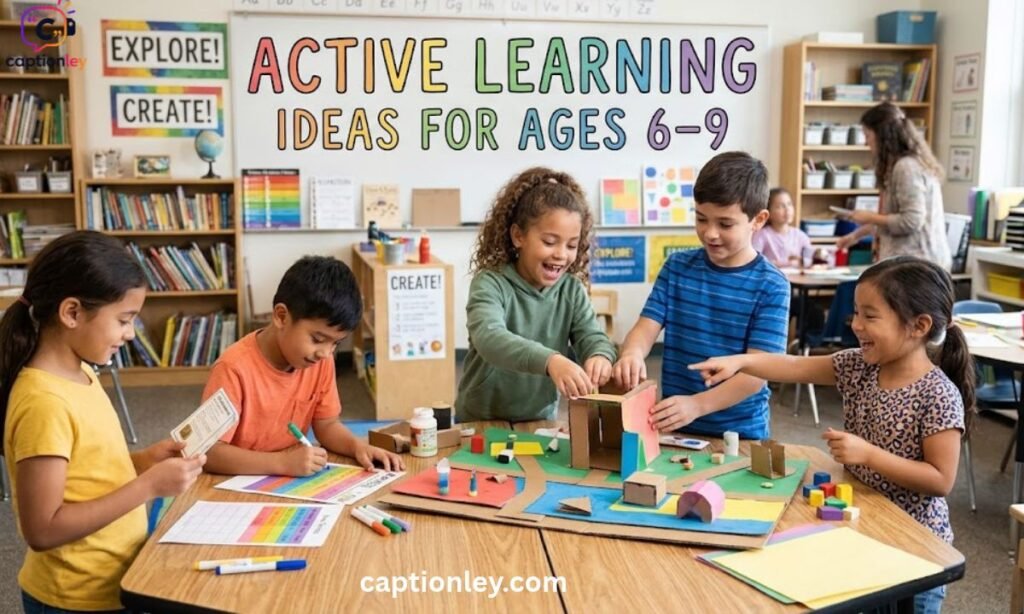
Active learning for elementary students can include more steps, rules, measurement, and problem solving. Children ages 6–9 enjoy real responsibility, so give them genuine roles in safe tasks instead of pretend ones. These activities connect directly to school subjects while still feeling like fun.
Baking
Baking activities cover reading, measuring, counting, and timing in one task. The child reads the recipe, measures ingredients, counts spoonfuls, and talks about temperature and time. Fractions appear naturally when a recipe calls for half a cup. An adult should handle the oven and any hot items.
Map Activities
Plan a walk together and look at distance, directions, and landmarks. A child who can read a simple map is building spatial thinking, which supports both maths and science later. Let your child lead part of the route and explain each turn.
Building Challenges
Set a simple goal, such as a bridge or tower that can hold a small toy. Test it, change it, and test again. These building challenges mirror how engineers work, and they teach that a first attempt is rarely the final one. They also make excellent problem-solving activities for kids.
Simple Budgeting
For children in this age range, small pretend budgets work well. Compare prices, add totals, and choose between options. Keep it light so it feels like a game. This builds decision-making skills and early money sense.
| Activity | Main skills | Extra challenge |
| Baking | Reading, fractions, timing | Double the recipe |
| Map activities | Direction, distance | Draw your own map |
| Building challenges | Planning, testing | Add a weight limit |
| Simple budgeting | Adding, comparing | Stay under a set total |
The table adds an extra challenge for each activity, so parents can raise the difficulty when the first version feels easy. Match the challenge to the child, because a task that is too hard can end the fun quickly.
Can Chores Become Learning Activities?
Yes. Learning through everyday chores is one of the simplest ways to apply the Fparentips approach. Household chores can teach counting, sorting, planning, reading, and responsibility, and no special lesson plan is needed. The parent simply invites the child to join in and asks a question or two along the way.
Laundry is a good example. Children can count socks, match pairs, sort by colour, and compare sizes. Cooking teaches measurement, reading, timing, fractions, sequence, and observation. Shopping teaches number recognition, basic money ideas, comparison, label reading, and planning.
| Chore | Skills children can practise |
| Laundry | Counting, matching, sorting, comparing |
| Cooking | Measuring, reading, timing, fractions |
| Shopping | Numbers, money, labels, planning |
This table helps a parent pick a chore based on what the child needs to practise. If counting is a struggle, laundry offers plenty of low-pressure practice. If reading needs work, a shopping list gives a real reason to read.
Children also join in more happily when they have a choice. Let them pick which chore to help with or which ingredient to measure first. Give them a small, clear job and thank them for the result. Over time, this builds responsibility and a sense of being a useful member of the family. These everyday learning activities also save parents time, which makes the habit easier to keep.
What Is Productive Struggle?
Productive struggle in learning means giving a child enough time to work through a reasonable problem before stepping in. It sits between two extremes: doing everything for the child, and leaving the child alone to fail.
Imagine a block tower keeps falling. A parent could fix it fast, but then the child loses the chance to work out the problem. A better response is to ask, “Which part keeps moving?” or “What could make the bottom stronger?” Then wait. Let the child test an idea. Offer help only if frustration becomes too high.
The key word is “productive.” Struggle helps when the task is challenging but possible. It stops helping when the child feels stuck with no path forward. Watch for signs such as crying, throwing objects, or repeatedly giving up. At that point, offer a hint or simplify the task.
Good hints keep the child in charge. Instead of saying, “Put the big block at the bottom,” try, “What do you think would happen if the big block went somewhere else?” This keeps the thinking with the child.
Productive struggle builds patience, resilience, and problem-solving skills. Children learn that effort leads to progress, and that difficult tasks can be solved step by step. That belief, often called a growth mindset, is a strong base for later schoolwork. The aim is a challenge that feels just hard enough, never one that breaks confidence.
Should Parents Let Children Make Mistakes?
Yes, as long as the situation is safe. Learning through mistakes is a natural part of active learning, and mistakes can become some of the most useful moments in a child’s day.
Consider a few everyday examples:
- A failed tower teaches balance.
- A spilled amount during measuring teaches care.
- A wrong prediction in a simple experiment leads to a better question.
Children do not need perfect results every time. Trying again matters more than getting it right on the first attempt. When a parent stays calm about errors, the child learns that mistakes are normal and not shameful.
Parents can support this by changing their words. Instead of “No, that’s wrong,” try “Interesting, what happened there?” This turns an error into a puzzle to investigate. It also keeps the child’s curiosity alive, which is much harder to rebuild once a child fears getting things wrong.
There is one clear boundary: safety. Mistakes with blocks, paint, or paper are fine. Mistakes involving hot water, sharp tools, or small objects that could be swallowed are not. Parents should choose tasks where the worst outcome is a mess or a fallen tower.
Children who feel safe to make mistakes tend to try new things more often. That willingness to try is one of the strongest signs of healthy child development, and it supports better learning outcomes over time.
How Does Play Fit Into Active Learning?
Play gives children a natural way to test ideas, practise skills, and make decisions. Learning through play is not a side activity. For young children, it is often the main way they make sense of the world.
Different kinds of play support different skills:
- Building games teach planning.
- Pretend play builds language and imagination.
- Puzzles support problem solving.
- Simple rule-based games support attention and memory.
Parents do not need to turn play into a lecture, because that can kill the fun. Ask a few useful questions, then let the child play. If a child is stacking cups, a single question such as “What happens if you add one more?” can stretch the thinking without taking over.
Play-based learning activities also help children learn social skills. Taking turns, sharing materials, and agreeing on rules all happen naturally during group play. These skills support cognitive development as well as emotional growth.
A good rule is to follow the child’s lead. If your child wants to turn a tower into a rocket, go along with it. The learning comes from their ideas, not from your plan. Sometimes the best parental guidance is simply to sit nearby, watch, and enjoy the game. Children notice when adults are interested, and that attention strengthens the bond between parent and child.
What About Screen Time?
Screen time and active learning can work together when screen use is interactive and shared. Screens can support learning, but watching passively is different from using a screen to start an idea.
A video can introduce a topic, and then the learning can go further:
- Watch a short video about plants, then plant a seed.
- Watch a building video, then make something with blocks.
- Use a drawing app, then draw the same idea on paper.
The key is turning watching into doing. A screen should be a starting point, not the whole activity. When a child finishes a video and reaches for paper or blocks, active learning is working as intended.
Parents can also talk about what the child is watching. Ask what happened, what they learned, and what they would try themselves. These questions turn a passive moment into a conversation.
Screen use should fit the child’s age and the family’s routine. Younger children usually need shorter, supervised sessions, while older children can handle more independent use with clear limits. Parents who want age-specific limits can check guidance from national paediatric organisations and public health bodies, which regularly update their recommendations.
No single rule fits every household. What matters most is that screen time does not replace play, movement, sleep, or family conversation. When these stay in balance, screens can be a helpful tool instead of a distraction.
Can Active Learning Improve Problem Solving?
Active learning gives children more chances to make decisions and test solutions, and problem-solving skills need practice just like any other skill. Children need small problems, not impossible ones.
Good starter problems include:
- A puzzle with a few pieces
- A structure that keeps falling
- A missing piece in a game
- A simple measurement issue
- A question with more than one possible answer
Each one gives the child something to work through. The child tries an idea, sees the result, and adjusts. This loop builds critical thinking and creative thinking at the same time.
Parents can strengthen the process by asking a few guiding questions. “What have you tried so far?” shows the child that effort counts. “What could you try next?” encourages a new approach. “How will you know if it worked?” builds the habit of checking results.
Over time, children start to break big problems into smaller steps. A child who once gave up on a falling tower may learn to build a wider base first. That shift shows real progress in problem-solving activities for kids, even if the tower still falls sometimes.
It also helps to praise the method, not only the result. Saying “I liked how you tried a new way” is more useful than “Good job.” It tells the child exactly which behaviour to repeat, and it supports a steady rise in confidence.
Can Active Learning Build Independence?
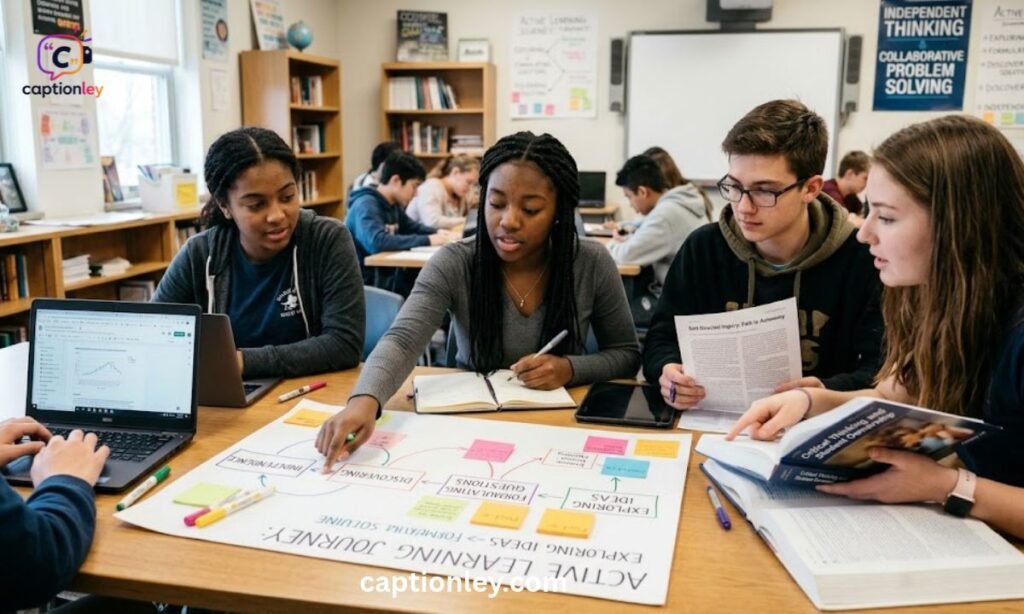
It can, when children receive age-appropriate choices and responsibilities. Independent learning for children grows from small moments of decision-making, repeated many times.
Parents can build independence in simple ways:
- Let the child choose the materials.
- Ask them to plan the next step.
- Give them time to try without interruption.
- Avoid correcting every tiny detail.
For example, a four-year-old who picks which blocks to use, and decides where to place them, is practising decision-making skills. A seven-year-old who plans a recipe step by step is practising organisation. Both are growing more capable and confident.
Boundaries still matter. Young children especially need supervision. Independence is not the same as being left alone. A parent can sit nearby, offer a hint if needed, and step in for safety. This creates a sense of security that lets the child try new things.
It also helps to match tasks to the child’s current level. A job that is a little challenging, but still within reach, builds confidence faster than one that is far too hard. When children succeed at small independent tasks, they gain the courage to attempt bigger ones.
Over time, parents often notice that children begin starting activities by themselves. They gather materials, set up a space, and ask their own questions. That is a strong sign that the learning habit is taking hold.
What Parents Should Avoid
Some habits can make active learning harder. Knowing them in advance helps parents adjust quickly. The following mistakes are common, and each has a simple fix.
Giving the Answer Too Fast
When parents answer immediately, the child stops thinking. Wait a little. A few seconds of silence often brings out an idea. If the child is stuck, offer a question instead of a solution.
Asking Too Many Questions
Do not turn play into an interview. One good question may be enough, and the child needs time to think and act between questions. Too many questions can make the child feel tested instead of supported.
Making Every Activity Academic
Children still need free play. Not every moment needs a lesson, and unplanned play often leads to the best discoveries. Let some activities stay purely for fun.
Choosing Tasks That Are Too Hard
If a child cannot begin, the task may need simplifying. Break it into smaller steps, or show a first move. A task that is slightly challenging works better than one that causes quick frustration.
Ignoring Safety
Hands-on learning still needs age-appropriate materials and supervision. Check objects for small parts, keep water and heat under adult control, and stay close during new activities.
| Mistake | Why it hurts | Better move |
| Answering too fast | Child stops thinking | Pause and ask a question |
| Too many questions | Play feels like a test | Ask one, then watch |
| Always academic | Free play is lost | Leave room for pure play |
| Task too hard | Child gives up | Simplify the first step |
| Ignoring safety | Risk of harm | Check materials first |
The table works as a quick checklist before any activity. No parent gets this perfect every day, so treat these as habits to improve gradually. Even small changes can make active learning parenting tips much more effective.
Is Fparentips a Formal Learning Programme?
No. The Fparentips learning programme is not a formal programme in the school sense. Fparentips presents parenting information and learning ideas, not a school curriculum or an accredited education programme. The website publishes several related articles on active learning, parenting, child development, and family activities.
That makes it useful for ideas. Parents can pick an activity, try it, and adapt it to their child. But it should not be confused with other things that carry professional standards, such as:
- A school curriculum
- A university programme
- A licensed therapy programme
- Professional medical advice
- A special education assessment
Each of these involves trained experts, tested methods, and often legal or professional oversight. A parenting website offers none of those protections, and it does not claim to.
This does not make the guide less valuable. It simply sets the right expectation. Think of it as a friendly source of ideas, similar to a book of family activities. Parents can use it to spark conversations and add variety to daily routines.
If a child needs structured support, such as help with reading difficulties or a learning disability assessment, a qualified teacher, psychologist, or paediatrician is the right contact. Fparentips can sit alongside that professional help as a source of gentle home activities, but it should never replace it.
Is Active Learning Guide Fparentips Trustworthy?
The guide contains several sensible ideas, but important claims should still be checked against stronger educational or professional sources. Fparentips is a parenting information website, not a medical authority.
Its advice on hands-on learning, open-ended play, questions, participation, and everyday activities fits many accepted early learning principles. The safety reminders are sound. The guide also avoids promising dramatic results, which is a good sign. It speaks in practical terms and focuses on small daily actions.
Parents can judge any parenting source with a few quick questions:
- Does it explain its ideas clearly and without exaggeration?
- Does it separate opinion from research?
- Does it mention safety and the need for supervision?
- Does it admit its limits?
- Does it suggest professional help when concerns are serious?
On most of these points, the Fparentips article performs reasonably well. It states plainly that it is not a medical or academic authority, and that is honest.
Still, parents dealing with developmental concerns, learning disorders, health issues, or serious behavioural problems should speak with qualified professionals. That is the safer route. The best approach is to use Fparentips for ideas and inspiration, while relying on doctors, teachers, and specialists for diagnosis and treatment. This keeps the guide in its proper place as one helpful tool among many.
Is Active Learning Guide Fparentips Evidence-Based?
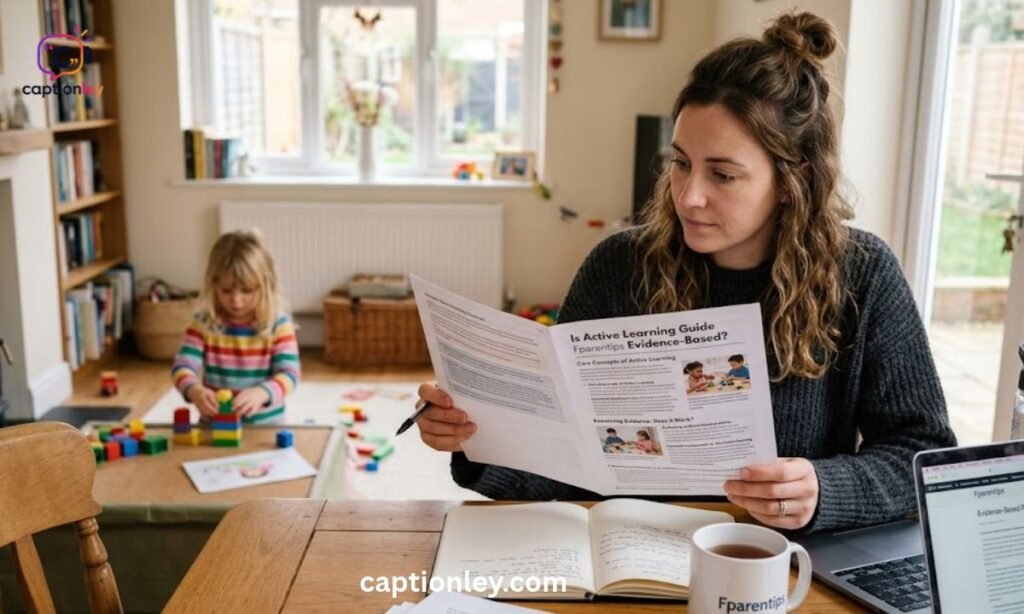
Parts of its approach match recognised educational research, but the guide itself should not be treated as a scientific study. This is an important difference. A source can agree with research without being research.
Active learning has a large research base, yet age matters, setting matters, and teaching method matters. The 2014 PNAS review covered university STEM courses, so it cannot automatically prove the same effect in preschoolers. Studies on young children often look at play, language, and early maths separately, and results depend on the type of activity.
What can we say with confidence? Many experts in early childhood education support hands-on activities, play, and adult-child conversation as useful for development. Those ideas appear throughout the Fparentips guide. In that sense, the article supports evidence-based parenting strategies, even though it does not present new data of its own.
Good parenting content can use research. It just needs to use it carefully. When reading any parenting article, parents can ask whether claims are linked to named studies, whether the study group matches their child’s age, and whether the language sounds balanced or exaggerated.
A fair summary is this: the Fparentips active learning approach is consistent with evidence-based learning principles, but it is a practical guide, not proof. Parents should expect gentle benefits over time, not guaranteed learning outcomes.
Benefits Parents May See
The benefits of active learning appear gradually, and they differ from child to child. Active learning activities may help children practise:
- Curiosity
- Communication
- Observation
- Planning
- Early maths skills
- Problem solving
- Patience
- Decision making
- Creativity
- Independence
Results vary. Some children take to hands-on tasks right away, while others need more time or a gentler start. The goal is not perfection but participation. A child who tries, talks about what happened, and tries again is already gaining from the process.
Parents can look for small signs of progress instead of formal test results:
- The child asks more questions than before.
- The child tries a second idea when the first one fails.
- The child explains what they did in their own words.
- The child starts activities without being asked.
These signs show growing thinking skills and a healthier attitude to learning. They are often more useful than any score.
There are benefits for parents too. Many report that they understand their child’s thinking better, and that shared activities strengthen their relationship. These gains are harder to measure, but they matter just as much. Active learning parenting tips work best when both sides enjoy the time together, so keep expectations kind and flexible.
A Simple Active Learning Routine
Parents can use a simple five-part pattern to bring an active learning routine for kids into any day. It is easy to repeat and needs no special preparation. Each step is short, and together they create a loop of asking, trying, and reflecting.
1. Pick a Normal Activity
Choose something already part of your day, such as cooking, building, walking, sorting, or gardening. Familiar tasks reduce planning and make the routine easy to keep. Start with the activity your child already enjoys.
2. Ask One Question
Pose a single open-ended question, such as “What do you think will happen?” One question is enough to start the thinking. Resist the urge to add more, because extra questions can crowd out the child’s own ideas.
3. Let the Child Try
Do not rush. Allow time for testing, and stay nearby for safety. Silence is fine here. The child may need a few moments to plan, and that pause is where much of the learning happens.
4. Talk About the Result
Ask, “What happened?” Let the child describe the outcome in their own words. If the result surprised them, ask what they noticed. This reflection step turns an action into understanding.
5. Try Again
Change one thing, then test it. Changing only one variable helps the child see cause and effect clearly. Repeat the cycle as long as the child stays interested.
Here is a short example. A parent and a four-year-old are making playdough. The parent asks, “What do you think happens if we add more water?” The child guesses, adds the water, and finds the dough too sticky. They talk about it, add more flour, and try again. In ten minutes, the child has predicted, tested, observed, and adjusted, without a single worksheet.
Choose one daily moment, such as dinner preparation or bath time, and use the routine there. Within a few weeks, many children begin asking their own questions, which is a clear sign that the habit is taking hold. Everyday life already contains learning, and parents only need to notice it.
Frequently Asked Questions
What is Active Learning Guide Fparentips?
Active Learning Guide Fparentips is a parent-focused learning approach that encourages children to learn through everyday activities, hands-on experiences, exploration, and play.
Why is active learning important for children?
Active learning helps children develop critical thinking, creativity, problem-solving skills, confidence, and independence by allowing them to explore and discover things themselves.
How can parents encourage active learning at home?
Parents can encourage active learning through simple activities such as cooking, sorting objects, growing seeds, building forts, mixing colours, and asking open-ended questions.
What are the best active learning activities for different ages?
Toddlers can enjoy sorting and pouring activities, preschoolers can explore colour mixing and seed planting, and children aged 6–9 can try baking, map activities, building challenges, and simple budgeting.
Is Active Learning Guide Fparentips suitable for everyday parenting?
Yes, its everyday learning ideas can fit naturally into family routines. Parents can encourage curiosity, allow children to make mistakes safely, and support learning without turning every activity into a formal lesson.
Conclusion
The active learning guide fparentips shows that meaningful learning doesn’t always need textbooks or classrooms. Everyday activities like cooking, playing, and exploring can spark curiosity, creativity, and problem-solving skills. With simple hands-on experiences and gentle parental guidance, children can turn ordinary moments into exciting learning opportunities.
The beauty of active learning guide fparentips lies in helping children learn through discovery, experimentation, and real-life experiences. By encouraging questions, allowing mistakes, and celebrating small achievements, parents can build their child’s confidence and independence. Remember, the best learning happens when children feel free to explore, imagine, and discover the world around them!

Maryam is a passionate content writer with 4 years of experience at CaptionK, where she developed engaging and informative content. Currently, she is working at Captionley.com, creating high-quality content that connects with readers and delivers meaningful value.