The Interworldradio Blog is an online publishing platform that shares written stories about global issues, technology, culture, the environment, and media. Although its name points to radio, it is not a broadcast station. It takes the old idea of radio, which is connecting people through stories, and brings it into online articles that readers can open on any device at any time.
This guide explains what the platform is, what its name means, how digital storytelling developed, which topics it covers, and who reads it. It also looks at the benefits, the limits, and the future of platforms built around global communication and modern media.
What Is The Interworldradio Blog?
The Interworldradio Blog is an online publishing platform that shares written stories and articles on global issues, technology, culture, the environment, and media. It works as a digital content platform where readers can explore ideas from different parts of the world. Its name suggests a link between people, cultures, and information.
The platform is built on the belief that communication has no borders. Through online articles, readers can learn about global trends, social issues, and cultural developments beyond their local surroundings. Instead of serving one industry, it offers broad content for general audiences who enjoy discovering new perspectives.
| Feature | The Interworldradio Blog |
| Platform type | Online publishing platform |
| Main format | Written articles |
| Core topics | Global issues, technology, culture, environment, media |
| Access | Any digital device, at any time |
| Audience | General readers, students, and creators |
The table shows that the blog is a text-based platform and not a traditional radio station. Its name refers to the idea of broadcasting and connection, while its real format is online articles. This helps readers set the right expectations before they visit.
Because it is not tied to a broadcast schedule, readers decide what to read and when to return. A single article stays available for months or years, which makes the platform useful for learning at your own pace. This flexibility is one of the main reasons digital publishing has grown so popular.
Meaning and Background of Interworldradio
The word Interworldradio joins three ideas: “Inter,” “World,” and “Radio.” Each part tells readers something about the goal of the platform.
| Word Part | Core Meaning | What It Suggests |
| Inter | Connection and interaction between groups | Readers and ideas meeting across boundaries |
| World | International communities and global experiences | A worldwide scope, not a local one |
| Radio | Communication, storytelling, and broadcasting | Sharing information with a wide audience |
The table shows that the name works like a short mission statement. “Inter” points to interaction, “World” widens the view to global communities, and “Radio” brings in the long tradition of broadcasting. Together they describe a platform that connects people through information and storytelling.
The meaning of radio has grown a lot over time. Radio began as audio broadcasting, where a transmitter sent programs to receivers in homes. Today, communication also includes podcasts, online streaming, digital publications, and multimedia storytelling. The word “radio” now stands for the wider act of sharing voices and stories with an audience, whatever the format.
The Interworldradio Blog fits into this modern media landscape. It keeps the spirit of radio but delivers it through written articles. A distinctive single-word name like Interworldradio is also easy to remember and easy to type into a search engine, which helps a global audience find the site again.
History and Development of Digital Storytelling
Storytelling has always changed with the tools people use. Understanding that history explains why platforms like this one exist.In the past, radio was among the most powerful communication tools because one broadcast could reach large audiences quickly. The trade-off was control. Listeners followed the station’s schedule, and only organizations with equipment and licenses could broadcast.
The internet changed this balance. It gave readers more control over what they wanted to consume and when. Blogs became a key part of this change because individuals, organizations, and media teams could publish detailed information without depending on traditional broadcasting systems. Internet publishing lowered the cost of sharing ideas and opened the door for independent publishers.
The growth of smartphones, social media, and online platforms pushed this shift further. People now expect information to be instant, searchable, and available from anywhere. Digital devices are no longer just tools for work. They are the main way many people read news, watch video content, and listen to podcasts.
The main stages can be summarized in order:
- Broadcast era: Radio reaches mass audiences through fixed schedules.
- Early internet era: Websites and online blogging let anyone publish.
- Mobile era: Smartphones make reading and listening possible anywhere.
- Social era: Social media turns stories into shareable, interactive content.
- Multimedia era: Articles, audio, and video combine into richer online storytelling.
Platforms like the Interworldradio Blog represent this move from traditional communication to modern digital publishing. They keep the storytelling approach of radio while using the flexibility of online articles.
Purpose of The Interworldradio Blog
The main purpose of the platform is to inform, educate, and connect readers through meaningful content. It aims to give readers global perspectives on topics that shape the modern world instead of limiting its focus to one place or one audience.
Several supporting goals follow from this purpose:
- Information sharing: Present clear, readable content that explains ideas without heavy jargon.
- Global awareness: Help readers understand situations in other regions and communities.
- Educational content: Offer background that students and curious readers can build on.
- Digital storytelling: Use narrative to make facts easier to follow and remember.
- Connection: Reflect the idea that people everywhere share questions and concerns.
Digital storytelling deserves a closer look. It means using digital tools to tell stories, often combining text, images, audio, and video. People have always used stories to pass on knowledge, because a story is easier to remember than a list of facts. By presenting information as readable stories, the blog continues this old habit in a modern setting.
The platform also supports awareness of important global topics, including technology development, environmental concerns, cultural changes, and communication trends. Awareness does not solve problems on its own, but it is usually where understanding begins. A reader who understands an issue can discuss it better, study it further, and make more informed choices.
This broad purpose explains why the blog covers many subjects. Its goal is wide understanding, not narrow expertise.
Main Topics Covered by The Interworldradio Blog
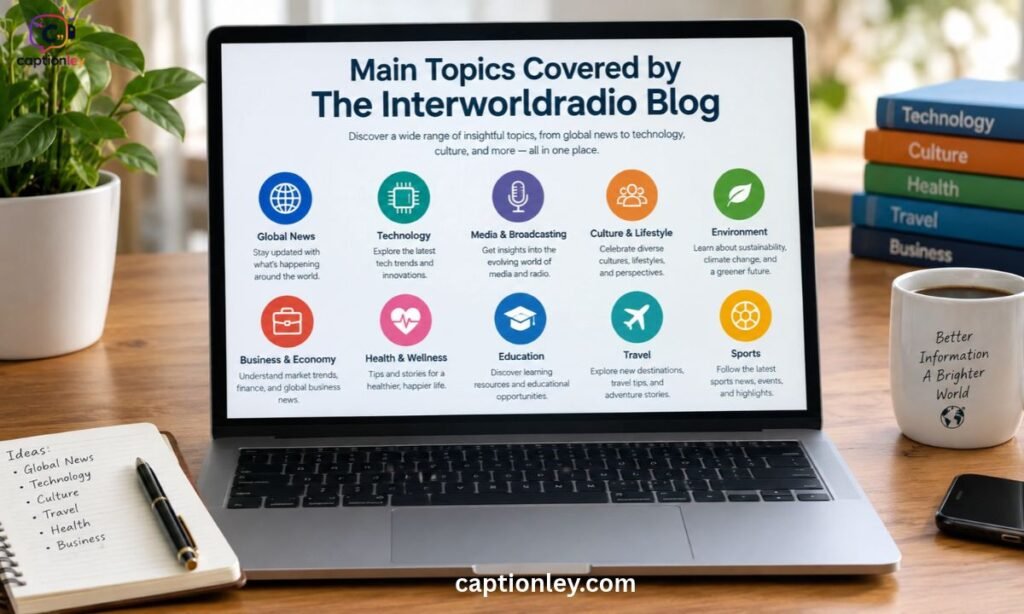
The Interworldradio Blog covers multiple categories so that readers with different interests can find something useful. The range is wide on purpose. Each category below connects back to the idea of global communication and shared learning.
Global Issues and International Stories
Global events and worldwide information sit at the center of the platform. This category explores social developments and issues that affect different communities. Global stories help readers understand situations beyond their own countries and think about international connections. In a connected world, this knowledge matters for education, business, technology, and personal growth.
Technology and Digital Innovation
Technology shapes communication, work, schools, and entertainment. This area looks at how digital transformation changes industries and daily life. Topics range from artificial intelligence to online communication tools. The goal is to explain new developments and their practical effects so readers can understand what changes mean for them.
Culture and Society
Culture links people through traditions, communities, and shared experiences. Content in this area explores lifestyles, identity, and cultural developments. Reading about other communities builds understanding between people from different backgrounds. By covering social topics, digital platforms can join wider conversations about identity and global relationships.
Environment and Sustainability
Environmental topics matter more each year because of climate change and sustainability challenges. The blog includes discussions on environmental awareness, environmental conservation, and global sustainability. Such content helps readers see the scale of these challenges and encourages responsible choices in daily life.
Media and Communication
Because of its link to radio, the blog also follows media development. Modern media has moved from traditional broadcasting into a mix of audio, video, written articles, and interactive media. Understanding this media evolution helps readers see how information reaches them and why format affects the way a story is received.
How The Interworldradio Blog Works
The Interworldradio Blog operates like a modern online publishing platform. The process is simple, and it shows why digital publishing is so flexible compared with broadcasting.
Content creators develop written articles around selected topics. The articles are then published online, where readers open them on digital devices such as computers, tablets, and smartphones. A typical workflow looks like this:
- Topic selection: Writers or editors choose a subject that fits one of the main categories.
- Research and drafting: Content creators gather information and write the article.
- Review and editing: The draft is checked for clarity, structure, and accuracy, following basic editorial practices.
- Publishing: The article goes live with a title, date, and category tags.
- Discovery: Readers find it through search engines, links, or social media.
- Access: Readers open it at any time on any device.
The biggest difference from broadcasting is timing. A radio program airs once at a set hour. A blog post stays available, so a reader can open it today, next month, or next year. This permanence also helps online accessibility, since older articles can continue to bring in readers long after they were first published.
Tags and categories add another layer of organization. A reader who enjoys one technology article can follow the tag to find similar pieces. This turns a set of separate posts into an organized library, which supports audience engagement and makes browsing easier.
Because the platform does not follow a broadcast schedule, readers decide what to read, how long to spend, and when to return. That flexibility is one of the biggest advantages of internet publishing.
Benefits of Reading The Interworldradio Blog
The platform offers several advantages for readers who want accessible information and global perspectives.
The main benefits include:
- Convenience: Online articles are available at any time, so readers learn on their own schedule.
- Variety: Broad coverage lets readers explore topics outside their usual interests.
- Global awareness: Content linked to different regions, cultures, and industries widens perspective.
- Plain language: General-audience writing makes complex subjects easier to follow.
- Open access: The blog appears to work as an information platform where readers can view published content without a traditional subscription, though features may change over time.
- Research starting points: Articles can introduce a subject and suggest directions for deeper study.
Reading at your own pace has a quiet advantage. You can pause, reread a paragraph, or open another tab to check an unfamiliar term. Live audio does not allow this. For many learners, this control improves understanding and memory.
A broad blog also works well as a first step into a subject. It gives context and vocabulary, and then readers can move on to specialized sources for depth. Used this way, general platforms support learning instead of replacing it.
For students, researchers, writers, and general readers, this kind of platform can provide useful background information and inspiration for further online research. It also encourages curiosity, since a reader can easily follow one idea to the next.
Who Uses The Interworldradio Blog?
Because the topics are broad, the audience is broad too. Different groups use the platform for different reasons.
| Audience | Typical Reason for Reading | Example Use |
| General readers | Curiosity and interest | Discovering a story about another culture |
| Students | Background for studies | Understanding a global issue before deeper research |
| Media enthusiasts | Interest in broadcasting and digital storytelling | Following how radio ideas shape online content |
| Writers and content creators | Learning publishing trends | Studying how topics are structured for readers |
| Professionals and businesses | Tracking global trends | Spotting changes in technology and communication |
The table shows that the platform serves several needs at once. A student and a business owner may read the same article but take away different lessons. This overlap is a strength of general-interest publishing, because one piece of content can support many goals.
General readers may use the blog to find interesting stories and learn about worldwide topics. Students may use it to understand unfamiliar subjects before opening academic sources. Media enthusiasts may enjoy discussions about communication, broadcasting, and online storytelling.
Writers and independent publishers can study the platform to understand modern publishing trends and the way topics are explained for wide audiences. Businesses and professionals who follow global trends may also benefit from reading about technology and social developments.
A wide audience also encourages clear writing. When content must work for readers of different ages and backgrounds, jargon becomes a problem. This pressure often leads to simpler, more readable articles.
The Relationship Between Radio and Modern Blogging
The connection between radio and blogging shows how communication has evolved. They are not rivals. They are two stages of the same effort to share information with many people.
Traditional radio was built on live broadcasts and audio programs. It let people receive information quickly but required them to follow scheduled programming. Digital blogs offer a different experience. Readers choose topics, search for information, and consume content whenever they want.
| Feature | Traditional Radio | Modern Blogging |
| Format | Audio programs | Written articles, often with images or media |
| Timing | Fixed schedules | Available at any time |
| Audience control | Listener follows the program | Reader chooses topic and pace |
| Searchability | Very limited | Easy to search |
| Depth | Limited by airtime | Flexible and can be very detailed |
| Entry barrier | Licenses and equipment | A website and an internet connection |
The comparison makes one point clear. Blogging gives the audience more control and gives creators lower costs, while radio offers immediacy and the warmth of a human voice. Neither format has disappeared. Many broadcasters now publish online articles, and many bloggers now release podcasts, which are audio shows delivered on demand.
Modern communication often combines formats. A single story may begin as a written article, continue as an audio discussion, and spread through short video content on social media. This is multimedia storytelling, where the story is the core and the format is a choice.
The Interworldradio concept reflects this movement toward connected digital communication. It keeps the community spirit of radio while using the search and sharing tools of the internet.
Limitations of The Interworldradio Blog
Digital blogs offer many benefits, but they also have limits. Honest evaluation helps readers use them wisely.
Information verification. Online publishing allows many kinds of content to be created, so quality varies. Readers should always consider the reliability of individual articles. Checking the sources, clarity, and consistency of a piece is a sound habit, especially for sensitive or technical subjects.
Broad coverage over deep coverage. A platform covering many subjects may not offer the same depth as a specialized website focused on one industry. A dedicated technology publication, for example, will usually go further on technical detail than a general blog. This is a trade-off between breadth and depth, not a flaw in itself.
Limited public information. Details about ownership, editorial teams, and organizational background may not always be widely available for independent digital platforms. This is common for smaller sites, but readers who value transparency should keep it in mind.
Readers can use this short checklist to evaluate any online article, including those on this platform:
- Check whether the author or publisher is named.
- Look for mentions of original sources, such as official reports or research.
- Compare key facts with at least one other trusted source.
- Note the publication date, since older information may be outdated.
- Be careful with strong claims that come without evidence.
The best approach is to treat blogs as a starting point and not a final authority. Readers should evaluate information carefully and compare important topics with other reliable sources when needed.
Importance of Digital Media Platforms Today
Digital media platforms have become essential because people increasingly rely on the internet for information. They support education, communication, and global connection in ways that were not possible a generation ago.One major effect is access. A student in a small town can now read the same global stories as a reader in a large city.
Online accessibility has opened knowledge to people who once had limited access to libraries, newsstands, or broadcast media.Another effect is opportunity. The rise of online publishing has allowed smaller platforms and independent creators to share ideas with worldwide audiences. They no longer need a printing press or a broadcast tower. A website and a clear voice are enough to begin.
Digital media platforms also change how people join public conversations. Readers can share articles, comment, and discuss topics across borders. This builds global relationships and helps different communities understand one another’s views.At the same time, the abundance of content makes quality more important. Readers need skills in media awareness, such as spotting reliable sources and separating facts from opinion.
Platforms that explain ideas clearly and respect their readers will stand out in a crowded space.The Interworldradio Blog reflects this modern approach to communication. It combines storytelling, information sharing, and digital accessibility to give general readers an easy way to explore worldwide topics.
Future of Platforms Like The Interworldradio Blog
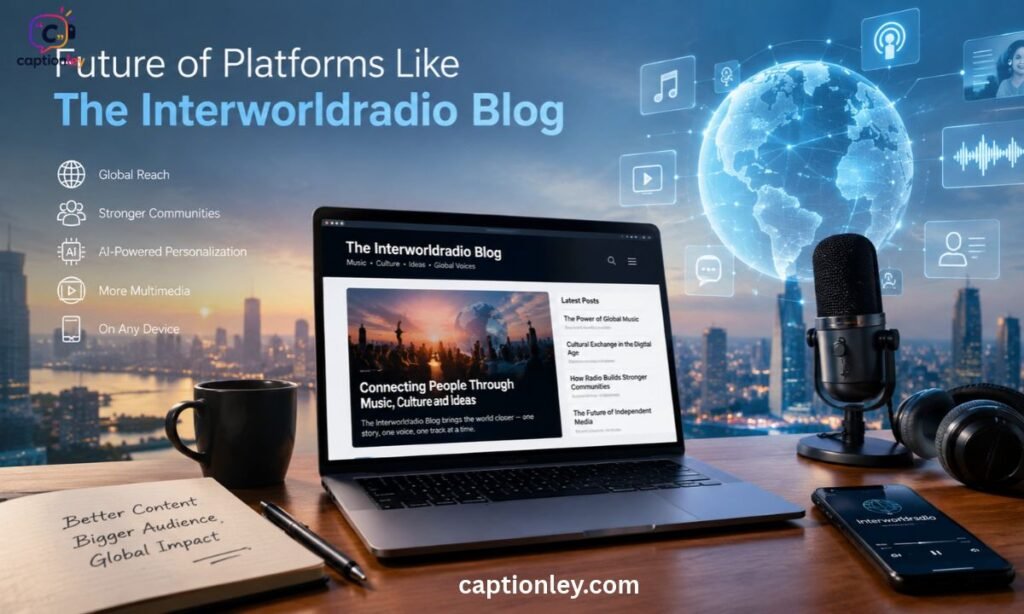
The future of digital storytelling is likely to involve more multimedia experiences. Artificial intelligence, podcasts, video content, and interactive technologies are already changing how audiences take in information.
Several trends are worth watching:
- Audio versions of articles: Readers may switch between reading and listening to the same story, depending on whether they are at a desk or on a commute. This brings the radio idea full circle.
- Video and visual explainers: Short clips and graphics can make complex topics easier to grasp.
- Translation tools: Artificial intelligence can help translate articles, opening global stories to readers in many more languages.
- Personalized recommendations: Platforms may suggest content based on reader interests, although this also raises questions about privacy and about seeing only one side of a topic.
- Community discussion: Stronger spaces for reader interaction may increase audience engagement and build longer-lasting trust.
Platforms focused on global communication will keep playing an important role as people look for information from different perspectives. With more content and more formats available, readers will have more choice but also more responsibility. Judging quality will become an everyday skill.
For platforms like the Interworldradio Blog, the path forward is clear. Keep the writing simple, keep the information honest, and use new tools to serve readers instead of overwhelming them. The formats will keep changing, but the need to connect people through stories will stay the same.
Frequently Asked Questions
What is The Interworldradio Blog?
The Interworldradio Blog is an online publishing platform that shares written articles and stories about global issues, technology, culture, environment, and media.
Is The Interworldradio Blog a radio station?
No, it is mainly a digital content platform. Although the name refers to radio and broadcasting, its primary format is online articles and written content.
What topics does The Interworldradio Blog cover?
It covers global issues, technology and digital innovation, culture and society, environmental awareness, and media communication, giving general readers useful information across many areas.
Who can read The Interworldradio Blog?
Anyone can read it. The platform suits general readers, students, researchers, media enthusiasts, writers, and professionals interested in global stories, modern technology, and communication trends.
Is The Interworldradio Blog free to access?
The blog appears to let readers access published content without a traditional subscription. However, features may change over time, so checking the website is recommended.
Is The Interworldradio Blog reliable?
Reliability depends on each article’s sources and editorial practices. Readers should evaluate information carefully and compare important topics with other trusted sources.
How is The Interworldradio Blog different from traditional media?
Traditional media like radio and television follow fixed schedules, while this blog lets readers choose what to read and when, with room for detailed explanations.
Conclusion
The Interworldradio Blog shows how the old spirit of radio can live on in the age of online articles. It takes the idea of connecting people through stories and delivers it through written content that anyone can open on any device. For readers who enjoy learning about global issues, technology, culture, and the environment, it offers an easy and flexible way to explore the world.
Like any open platform, it works best when readers stay curious and thoughtful. Use it as a starting point, check important facts with other trusted sources, and enjoy the range of perspectives it brings. As multimedia tools, translation, and community features grow, platforms built on global storytelling will keep their place, and the need to connect through stories will never fade.

Maryam is a passionate content writer with 4 years of experience at CaptionK, where she developed engaging and informative content. Currently, she is working at Captionley.com, creating high-quality content that connects with readers and delivers meaningful value.