
Gaming has become a data-driven hobby, and players now rely on numbers to understand how they win, lose, and improve. This guide explores hearthstats interesting facts to show how match tracking, deck records, and gaming statistics support smarter decisions in strategic card games. You will learn why win rates need context, how deck building and player psychology shape results, and how gaming communities share knowledge.
The article also covers the competitive gaming meta, gaming technology advancements, beginner analytics habits, and practical HSSGameStick guidance for retro gaming performance. Written in simple language for 2026, it helps every reader turn raw gaming data into clear, useful improvement.
Understanding Hearthstats and Its Connection to Gaming
HearthStats is a name linked to community-driven Hearthstone tracking. Hearthstone is a free-to-play digital collectible card game from Blizzard Entertainment, a major American game studio. Players build decks from a card collection and then compete in turn-based matches that mix strategy, resource management, and a little luck.
The idea behind HearthStats was simple. Players recorded match results, grouped them by deck, and reviewed how each deck performed. This turned vague feelings into measurable HearthStats gaming data. Instead of saying “this deck feels strong,” a player could say “this deck won 58 of 100 games.”
Hearthstone matches are short, so a player can finish dozens of games in a single week. That volume creates more information than memory can hold. Tracking turns scattered games into organized records, which makes gaming performance analysis possible even for casual players.
One caution applies here. Tools change over time, and features that existed in the past may be updated, moved, or removed. Treat HearthStats as a historical example of tracking culture, and always confirm what a platform offers today before depending on it. The lessons about statistical analysis stay useful regardless of which tool you choose.
Interesting Facts About Hearthstats and Gaming Statistics
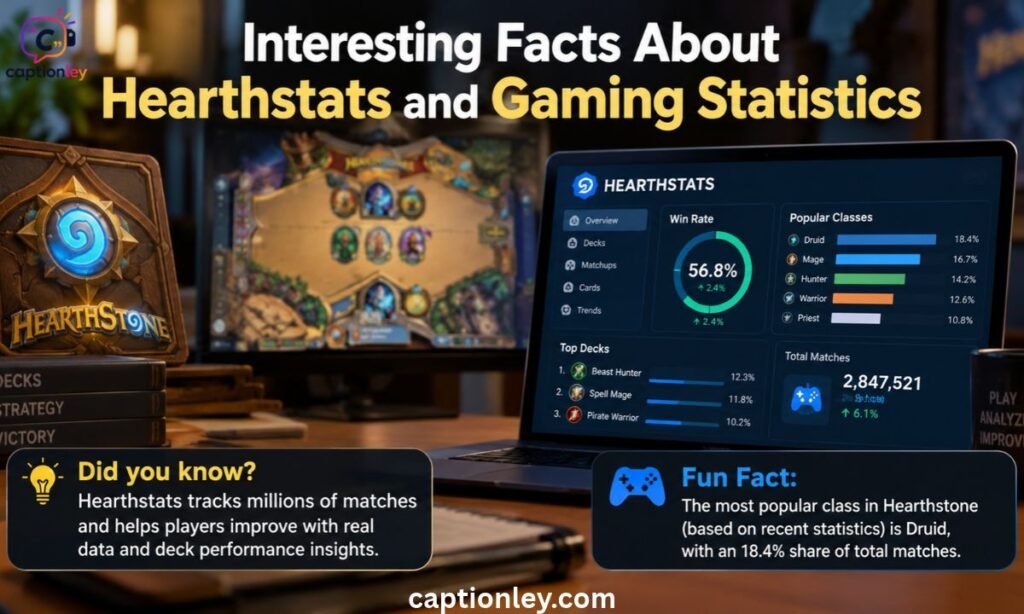
The most valuable hearthstats interesting facts are less about a website and more about the habits it encouraged. These habits form the base of HearthStats gaming insights and apply to nearly every competitive game.
The following ordered list explains the key facts that tracking communities repeat most often.
- A high overall win rate can hide weak matchups against certain opponents.
- Popular cards are not always the strongest cards, because fashion and familiarity drive popularity.
- Small samples are unreliable, so ten games prove very little.
- Rank changes results, since the same deck behaves differently at different skill levels.
- Balance updates reset assumptions and make older records less reliable.
Each fact pushes players toward patience. When you accept that numbers need context, you stop chasing short winning streaks and stop abandoning good decks after a few unlucky games.
Hearthstats Interesting Facts: Exploring Gaming Data and Strategy
Gaming statistics and data analysis work best when you ask a clear question first. For example, “Which opponent class beats my deck most often?” is a better question than “Is my deck good?” Clear questions lead to useful answers, and useful answers lead to better gaming decisions. This is the heart of HearthStats tips and strategies: collect honest data, ask focused questions, and change one thing at a time.
How Gaming Statistics Help Players Improve Performance
Gaming statistics give players a structured way to measure progress. Without records, people judge themselves by memorable wins and painful losses. These emotional memories paint an inaccurate picture of real skill. Statistics fix this by showing results across many matches and conditions.
Consider a player who believes their favorite deck is excellent. After tracking fifty games, they notice it loses most matches against fast aggressive opponents. That insight points to a clear fix, such as adding cheaper defensive cards. This is gaming performance improvement in action: the data shows the weakness, and the player responds with a targeted change.
The next unordered list shows what players can learn from basic tracking.
- Which decks perform best over time
- Which opponents cause the most trouble
- Whether going first or second changes results
- Whether results improve week after week
- Which mistakes repeat most often
Gaming strategy optimization is not about removing uncertainty. Card games include random draws, so no player can control every outcome. The goal is to make decisions based on stronger evidence. Steady observation, careful testing, and regular practice remain the three pillars of player performance growth, and they work together rather than separately.
The Importance of Deck Building in Strategic Card Games
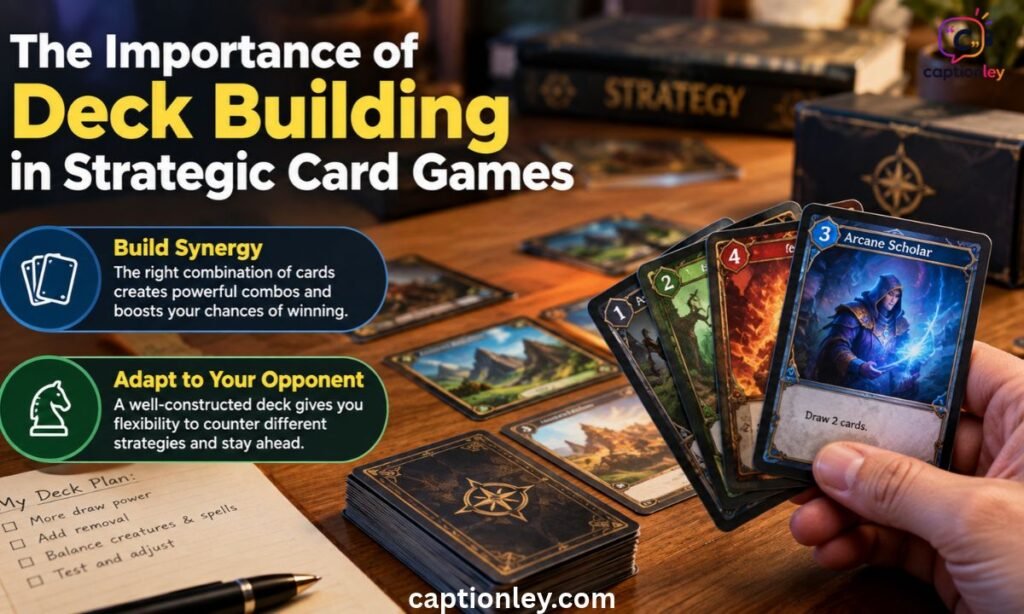
Deck building is the process of choosing which cards to bring into a match. In strategic card games like Hearthstone, a deck has a fixed number of slots, so adding one card means removing another. Every choice carries a cost, which is why deck building strategies matter so much.
Strong decks usually have a clear goal. Some decks aim to win quickly with early pressure. Others try to survive and win later with powerful late-game cards. A deck that mixes too many goals often feels inconsistent, even if every individual card is strong.
Good deck construction balances three areas: offense, defense, and resource generation. Offense ends games, defense protects your health, and resource generation keeps you supplied with options. When one area is missing, the deck develops predictable weaknesses.
Data helps here. If your fast deck loses most games that last beyond turn ten, it probably lacks tools for long matches. If your slow deck loses before it reaches its strongest cards, it may need cheaper early plays.
The best testing method is simple: change one card, play a meaningful number of games, and compare the results. Changing five cards at once makes it impossible to know what helped. Patient testing builds understanding, and understanding builds better decks.
Why Win Rates Do Not Tell the Complete Story
Win rate is the percentage of games a player wins. It is the most common number in competitive gaming, yet it is often misunderstood. Gaming win rates hide details such as opponent type, rank, and sample size.
The table below uses illustrative numbers, not real statistics, to show how one deck can look strong overall while hiding a serious weakness.
| Opponent Type | Games Played | Wins | Win Rate |
| Fast aggressive deck | 40 | 30 | 75% |
| Midrange deck | 40 | 22 | 55% |
| Slow control deck | 20 | 6 | 30% |
| Overall | 100 | 58 | 58% |
The overall result of 58 percent looks healthy. However, the deck wins only three of every ten games against control opponents. If more control decks appear on your ladder, your real results will fall. A player who reads only the overall number will be surprised, while a player who reads matchups will see the drop coming.
Sample size matters just as much. Eight wins from ten games is encouraging, but it is weak evidence. Hundreds of games give a far more reliable picture. Also remember that a 60 percent deck tested at a low rank cannot be fairly compared with a 55 percent deck tested at a high rank. Always compare like with like.
The Role of Player Psychology in Competitive Gaming
Competitive gaming depends on more than card knowledge. Player psychology in gaming strongly influences how people react to pressure, surprise, and long losing streaks. A frustrated player often rushes decisions, ignores better options, or abandons a working strategy too early.
Tracking records support healthier thinking because they separate short-term disappointment from long-term progress. Losing five games in a row does not automatically mean a deck has stopped working. Random variation can produce bad sessions even when every decision was reasonable. Reviewing match history lets a player ask, “Were my choices sound?” instead of only asking, “Did I win?”
Several habits support a calmer mindset.
- Set short practice sessions instead of marathon sessions
- Take a break after a tilting loss
- Review mistakes without harsh self-criticism
- Judge decisions by quality, not only by outcome
These habits show that gaming decisions improve when emotion is managed. Knowledge of mechanics is important, but patience and reflection turn knowledge into consistent results. Players who build emotional discipline often improve faster than players who only study cards.
How Gaming Communities Share Knowledge and Strategies

Gaming communities help players learn faster than they could alone. Forums, video guides, deck lists, and discussion groups allow players to compare ideas and see how others approach the same game. This knowledge sharing exposes people to strategies they might never discover through personal testing.
Community-driven tracking showed how powerful shared information can be. When players compare results, they spot emerging gaming trends and challenge old assumptions. A strategy that looks weak in one person’s records might look strong when many players combine their data.
Still, community advice needs careful filtering. A deck that works for an expert may fail for a beginner. Opponent choice, rank, and game updates also change outcomes. The smartest approach is to learn from others and then test ideas yourself.
HSSGameStick Instructions From HearthStats: Complete Gaming Guide
Communities also share hardware knowledge. Players who enjoy retro gaming often trade setup tips for compact game sticks such as the HSSGameStick. Common community advice includes reading the included manual first, using a stable power source, and testing one setting at a time. Since models and software can differ, always follow the official HSSGameStick instructions that came with your device.
Understanding the Changing Competitive Gaming Meta
The meta is the set of strategies, decks, and playstyles that are popular or effective at a given time. The competitive gaming meta shifts when new cards arrive, balance changes are released, or players discover stronger combinations.
A deck that dominates one month may struggle the next. Opponents learn to counter it, and its once-surprising strengths become predictable. This does not mean the deck was badly built. It means success depends partly on the environment around it.
Historical match records can show these shifts. If a deck’s results drop steadily across several weeks, the data suggests the environment has changed. This helps players decide whether to adjust or hold steady.
Balance matters here. Switching decks every few days prevents mastery, because you never learn a deck’s small details. Staying with one deck forever can also hurt, because the meta moves on. The best competitive gaming strategies combine adaptability with enough practice to play each deck well.
A simple rule works for many players: review your results weekly, change only what the data supports, and give each new idea enough games to prove itself.
How Technology Has Changed Gaming Performance Analysis

Gaming technology advancements have transformed how players collect and read information. Early tracking required typing results by hand, which was easy to forget or get wrong. Later tools captured match events automatically and presented them through charts, histories, and summaries.
Modern analytics software can show card usage, matchup records, and deck performance. Some tools also display overlays during matches, listing cards played and cards still possible. These features support strategic thinking, but they do not guarantee success. Data cannot explain every decision, so interpretation remains the player’s job.
Technology has also reached retro gaming. Plug-and-play game sticks make older games easy to enjoy on modern TVs.
Instructions Manual HSSGameStick: Complete Setup and Usage Guide
Compact game sticks usually connect to a TV through an HDMI port and draw power through a USB cable or adapter. Start by reading the instructions manual that came with your HSSGameStick, since model details matter. Connect the stick, power it, select the correct TV input, and follow the on-screen setup. Use a stable power source rather than a weak TV port when possible.
HSSGameStick Instructions From HearthStats: Complete Setup
Think of setup like tracking: go step by step and record what you change. The ordered list below gives a safe general routine.
- Read the official manual first.
- Connect the device and power source.
- Pair or plug in the controller.
- Test one game before changing settings.
- Note any change that helps or hurts.
Why Beginners Should Learn Basic Gaming Analytics
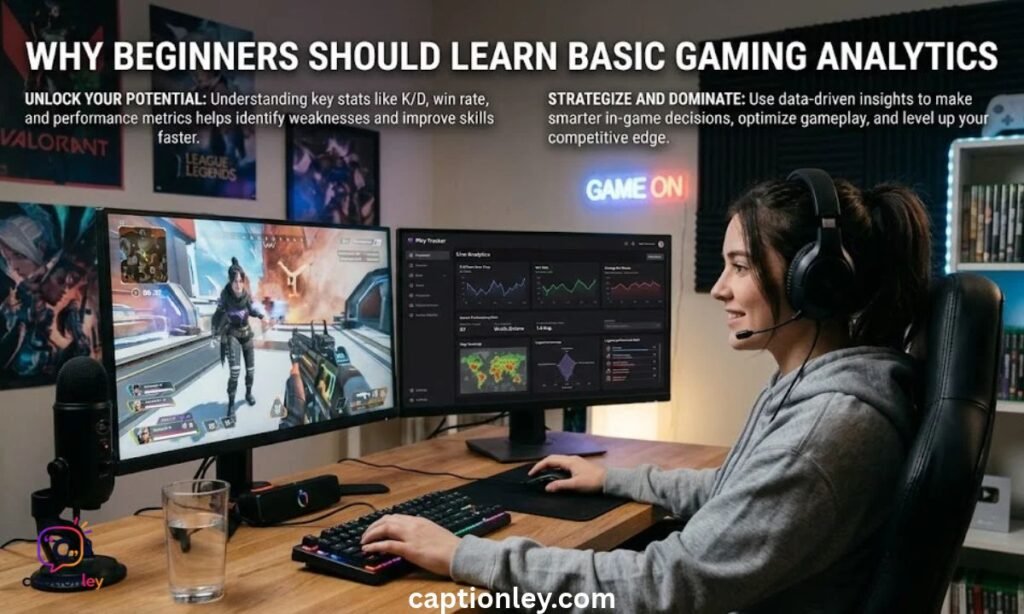
Gaming analytics for beginners does not require advanced math. A simple notebook or spreadsheet is enough to begin. Record the deck you used, the opponent type, and the result. After twenty or thirty games, patterns usually start to appear.
A beginner who keeps losing to fast opponents may learn their deck lacks cheap defensive cards. Another may notice they often run out of resources late in the game. Spotting specific problems is better than trying to fix everything at once.
Beginners should also set realistic expectations. Early results are noisy, and a few wins or losses prove little. Slow, steady tracking builds confidence in reading numbers. Over time, players move beyond basic win rates and begin studying matchups, consistency, and the effect of changing conditions.
Controller Settings HSSGameStick: Complete Guide for Better Gaming
Good HSSGameStick controller settings can improve comfort and accuracy. Check whether your device offers button remapping, and place your most-used actions where your fingers rest naturally. Make one change per session so you can tell what helped.
Controller Settings HSSGameStick: Complete Setup and Gaming Guide
If a controller feels slow or unresponsive, first check batteries or charge, then check the connection distance. Wireless controllers can lag when signals are weak. Keep the receiver clear of obstacles and test again before changing anything else.
Must Try
Try keeping a short log of your settings and results for one week. It takes minutes and reveals what truly helps.
The Future of Gaming Statistics and Data Analysis
The future of gaming analytics will likely bring smarter software, clearer charts, and artificial intelligence that explains data in plain language. Instead of showing endless numbers, tools may highlight repeated mistakes and suggest where to practice next.
Challenges remain. Data accuracy, privacy, and fair play all matter. Advice built on incomplete data can mislead, and too much dependence on automated guidance can weaken independent thinking. The best tools will teach players while preserving the creativity and uncertainty that make games fun.
Upgrades HSSGameStick: Guide to Better Retro Gaming
HSSGameStick upgrades usually start with simple steps, such as a better power adapter, a stable HDMI connection, or a newer controller. Check the manufacturer’s guidance before changing anything, since unsupported changes can cause problems.
Upgrades HSSGameStick: Improve Gaming Speed and Performance
To improve gaming speed and retro gaming performance, keep storage tidy, avoid overheating by allowing airflow, and use a reliable power source. Treat upgrades like tracking: change one thing, test, and compare results.
Frequently Asked Questions
What Are Some Interesting Facts About HearthStats?
HearthStats is known for helping Hearthstone players track match results, analyze deck performance, monitor win rates, and understand competitive gaming strategies through statistics.
How Does HearthStats Help Improve Gaming Performance?
HearthStats helps players understand their gaming performance by tracking wins, losses, and deck statistics, allowing them to identify weaknesses and improve strategies.
Why Are HearthStats Gaming Statistics Important?
HearthStats gaming statistics provide insights into match outcomes, deck effectiveness, and player performance, helping gamers make informed decisions and develop better strategies.
How Does HearthStats Help With Deck Building Strategies?
HearthStats provides historical deck performance data that helps players compare strategies, identify successful card combinations, and make informed adjustments to their Hearthstone decks.
What Makes HearthStats Interesting for Competitive Gamers?
HearthStats offers insights into win rates, matchup trends, and deck performance, making it useful for competitive players interested in data-driven gaming strategies.
Conclusion
Gaming statistics help players evaluate strategies, spot weaknesses, and measure progress. Exploring hearthstats interesting facts teaches valuable lessons about win rates, sample size, deck building, player psychology, and community learning.
Even as tools change, the principles of good performance analysis remain useful. Players who combine accurate data with patience, practice, and creativity can make better gaming decisions in 2026 and beyond. The real value of statistics is not predicting every outcome but helping you enjoy steady improvement.

Maryam is a passionate content writer with 4 years of experience at CaptionK, where she developed engaging and informative content. Currently, she is working at Captionley.com, creating high-quality content that connects with readers and delivers meaningful value.