Many business owners wonder if a published case study can really prove an agency’s skill. This guide looks at client case aelftech com, the page where Aelftech shares four projects: local SEO in Chicago, e-commerce SEO in New York, B2B PPC in San Francisco, and WordPress speed work in Austin.
You will see what each project aimed to do, which results the company reports, and why those figures are self-reported and not independently verified. The article also explains key metrics, semantic SEO lessons, and a simple checklist for verifying claims. By the end, you will know how to read any agency case study with clear eyes and ask smarter questions before you hire.
Quick Answer What Is Client Case Aelftech Com?
Client case aelftech com is a search phrase people use to find the published case-study page of Aelftech. The page covers four projects in four U.S. cities. Each project has its own goal, its own method, and its own headline number.
Think of the page as a showroom. A showroom shows you the best cars, but it does not tell you how they run after ten years. In the same way, Aelftech client case studies show selected wins. They are a useful starting point for research, not a final verdict.
The four projects are easy to summarize. A Chicago home-services company used local SEO to get more phone calls. A New York fashion brand used e-commerce SEO to grow organic search traffic. A San Francisco fintech startup used PPC campaign optimization to lower lead costs. An Austin news publisher used website performance optimization to load pages faster.
| Project | Main goal | Headline reported result |
| Chicago HVAC and plumbing | Local visibility | 215% rise in organic calls |
| New York fashion brand | Organic growth | 450% more non-branded traffic |
| San Francisco fintech | Better paid leads | Cost per lead fell from $450 to $115 |
| Austin news publisher | Faster pages | PageSpeed score rose from 32 to 94 |
The table gives you the full picture in one glance. Each row uses a different yardstick: calls, visits, cost, and speed. That variety makes the page interesting, but it also means you cannot rank the four projects with one shared number. One more point matters: Aelftech publishes these figures itself, so they are reported results and not audited facts.
What Is Aelftech and What Services Does It Offer?
Aelftech describes itself as a digital marketing agency that serves businesses across the United States. A digital marketing agency is a company that helps other businesses get found online, win customers, and keep their websites healthy. Its service list explains why the four case studies look so different from each other.
The company lists these main services:
- SEO services: work that helps pages appear in Google’s unpaid results.
- PPC management: running and improving paid ads on platforms such as Google Ads.
- Social media marketing: building reach and engagement on social platforms.
- WordPress development: building and fixing websites that run on WordPress, a popular website-building system.
- Digital strategy: linking all channels to one clear business goal.
Each service lines up with at least one case study. SEO appears in Chicago and New York. PPC appears in San Francisco. WordPress work appears in Austin. That match is a good sign, because the examples fit the services the agency says it sells.
These services also overlap in real life. A fast WordPress site helps search engine rankings and also lowers the cost of paid clicks, because visitors stay longer. Keyword research feeds both organic articles and paid ad groups. Good tracking helps every channel. An agency that understands this overlap can attack a problem from several sides. When you read the page, ask which service fits your top goal and look at the case study closest to it.
Understanding Aelftech’s Client Case Studies
Not every case study tells the same story, yet all the Aelftech digital marketing case studies follow one simple path. Each starts with a problem, lists the actions taken, and ends with the numbers. This layout is common in agency marketing because it is easy to scan and easy to remember.
Before you dive into each project, it helps to understand how the page is built and which numbers it relies on. That background lets you judge every claim with a cooler head. The next two sections cover the layout and the metrics.
How Aelftech Presents Its Digital Marketing Projects
Aelftech shows four projects from four industries. The page keeps the same order every time: the challenge, the plan, and the outcome. This steady structure lets you compare projects side by side, which is a real strength of SEO case studies written in this style.
Here is the flow each story follows:
- The client faces a clear business problem, such as weak local visibility or high ad costs.
- Aelftech describes the steps it took, such as cleaning directory listings or adding negative keywords.
- The page lists the reported outcome, usually as a percentage or a before-and-after figure.
The format also has a weak spot. The agency writes the story and picks the numbers. Readers rarely see baseline data, exact tracking methods, or full time frames. A percentage without a starting point is like a speed with no distance. It sounds impressive, but it tells you little. Treat each case as a map that shows where to explore and not as proof that you will reach the same place.
Key Metrics Used to Measure Campaign Performance
The case studies lean on a small set of traffic metrics, ranking metrics, and business numbers. A metric is simply a number that tracks progress toward a goal. Knowing what each one means helps you judge campaign performance for your own business.
- Organic calls: phone calls that start from unpaid listings, such as Google Maps.
- Non-branded organic traffic: visits from people who searched for a topic or product and not for the company name.
- Cost per lead (CPL): the money spent to win one inquiry.
- Conversion rate: the share of visitors who take a wanted action, such as filling in a form.
- PageSpeed Insights score: a 0 to 100 score from a Google tool that tests how fast a page loads.
- Largest Contentful Paint (LCP): the time it takes for the biggest visible item on a page to appear.
A metric works like a speedometer. It shows how fast you are moving, but it does not tell you if you are headed to the right place. A site can have a perfect speed score and still bring no customers. A campaign can lower lead costs and still lose money if those leads never buy. Strong SEO performance measurement always places activity numbers next to business results, such as booked jobs, closed sales, and revenue.
Local SEO Case Study Growing Traffic for a Chicago HVAC and Plumbing Business
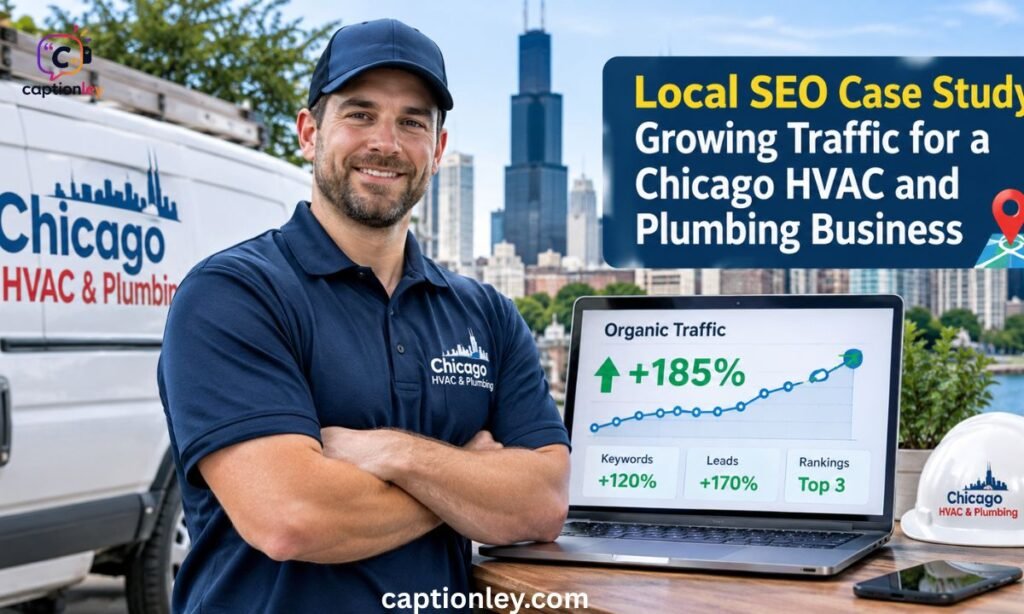
Picture a homeowner at midnight with a burst pipe. She types “emergency plumber Chicago” into her phone and calls the first trusted name she sees. That moment shows why local SEO strategies carry so much weight. The searcher needs help now, and the business that appears first often wins the job.
This local SEO case study follows a Chicago HVAC business that also handles plumbing. HVAC stands for heating, ventilation, and air conditioning. The company had years of experience, yet its online presence did not match its skill. Aelftech says it closed that gap. For a plumbing business like this one, phone calls matter more than page views, and a booked job matters more than a ranking screenshot.
The Business Challenges
The company knew its trade well, but Google did not show it in local results. Local search engine rankings rely on three ideas: relevance, distance, and prominence. Relevance means how well a business profile matches the search. Distance means how close the business sits to the searcher. Prominence means how well known and trusted the business looks online, often judged by reviews and mentions.
Experience alone does not earn a spot in the map pack. The map pack is the group of three local businesses that Google shows beside a map. Rivals with stronger profiles and more reviews can beat a more skilled company. For this HVAC firm, that meant lost emergency calls, which are the most valuable jobs in the trade. The real problem was not skill. It was visibility at the exact moment customers needed help.
Local SEO Strategies and Optimization Methods
Aelftech describes three main steps in this plan:
- Google Business Profile work. A Google Business Profile is the free listing that shows a company’s hours, photos, and reviews in Maps and search. The team improved categories, photos, service details, and review activity.
- Citation cleanup. Citations are mentions of a business name, address, and phone number on other websites. The team fixed mismatched details across directories so Google could trust the data.
- New local pages. The team created pages for Evanston, Oak Park, and Naperville, which are areas near Chicago that the company serves.
This is a sound plan for a service business. One caution applies, though. Location pages must give real local value, such as local project photos, service details, and area-specific questions. Copy-and-paste pages with only the city name swapped can hurt website user experience and may be ignored by Google.
Reported Rankings, Traffic, and Lead Generation Results
Aelftech reports a 215% rise in organic calls from Google Maps. It also reports top-three Google rankings for chosen searches and a 38-times return on monthly SEO spend over six months. The page does not share the starting call count or the math behind the return.
That missing detail matters. A rise from ten calls to thirty is also 215%-style growth in percentage terms, but the business impact is tiny. A strong check would use call-tracking logs and analytics reports. Better still, ask about qualified leads and finished jobs. Those numbers prove lead generation value far better than rankings do.
E-Commerce SEO Case Study Improving Organic Search Traffic
Paid traffic is like renting a shop. You pay every month, and when you stop paying, the customers disappear. Organic traffic is closer to owning a shop. That idea drives this case. A New York fashion and apparel brand relied heavily on Facebook ads, and costs kept climbing. The owners wanted a second source of buyers.
Organic search can fill that role, but it takes time. It needs steady work on content, site structure, and links. This case shows one plan for organic traffic growth in an online store. Read it as a sample strategy and not as a promise of the same result.
E-Commerce SEO Challenges and Opportunities
An e-commerce business faces rising ad prices year after year. Customer acquisition cost, which is the money spent to win one new buyer, often grows as more rivals bid for the same shoppers. A store that depends on one paid channel can watch its profit shrink without warning.
Organic search offers a way out. People research styles, sizes, and trends before they buy. A store that shows up early in that research can earn trust before the shopper reaches checkout. Strong e-commerce SEO connects helpful guides to product and category pages, so a reader who comes to learn can move on to shop. This is the main opportunity the New York brand wanted to capture.
Keyword Research, Content Optimization, and Technical SEO
Aelftech says it fixed more than 4,000 crawl errors during a technical audit. Crawl errors are problems that stop Google from reaching or reading pages. The team also added structured data for products. Structured data is code that tells search engines details such as price, stock status, and ratings.
On the content side, the team built a fashion guide hub that linked to category pages. Picture a wheel. The guide sits at the center, and the category pages are the spokes. This setup uses keyword research to find topics shoppers ask about, then content optimization to answer them well. The team also earned backlinks from fashion publishers and influencer blogs. A backlink is a link from another website to yours, and Google treats good ones as votes of trust. Together, these steps cover technical SEO, on-page work, and off-page work in one plan.
Reported Organic Traffic and Conversion Results
Aelftech reports 450% growth in non-branded organic traffic. It also reports $1.2 million in added yearly revenue and a 60% drop in blended customer acquisition cost over 12 months. Blended cost means the average cost across all channels, paid and unpaid together.
These claims come without public analytics data. Seasons, sales, and price changes can also shift results in any store. A fair review would compare Google Search Console clicks, conversion tracking, orders, and revenue across matching time periods. Google Search Console is a free Google tool that shows how a site performs in search. Without that comparison, the numbers remain interesting claims and not confirmed facts.
B2B PPC Case Study: Improving Lead Generation and Advertising Efficiency

Cheap clicks can be expensive. A click that never becomes a customer is wasted money. This B2B PPC case study shows that problem clearly. PPC means pay-per-click, a model where an advertiser pays each time someone clicks an ad. A San Francisco fintech software startup spent about $15,000 a month on Google Ads, and each lead cost $450.
Many of those leads did not fit. The firm sold enterprise software, yet some inquiries came from job seekers and people hunting for free tools. So the real goal was better leads and not simply more leads. That focus sits at the center of good lead generation strategies in B2B advertising.
The Challenges of B2B Paid Advertising
B2B means business-to-business, where one company sells to another. B2B searchers have mixed motives. Some want a quick definition. Some want a free template. A few are ready to compare vendors. Ads cannot tell these people apart unless the setup is careful, and budgets drain fast when the wrong people click.
Sales cycles in B2B are also long. A lead may need weeks of talks before buying. That makes advertising costs hard to judge in a short window. This is why paid advertising in B2B needs constant care and not a one-time fix. The best teams review search term reports weekly, remove waste, and move money toward terms that bring real buyers.
PPC Campaign Optimization and Targeting Strategies
Aelftech says it added more than 800 negative keywords. A negative keyword tells the ad platform not to show your ad for certain terms. Words such as “free,” “jobs,” and “template” were blocked, which cut out many poor-fit clicks.
The team also used PPC targeting to reach business decision-makers in fitting industries. Finally, it rebuilt the landing page around a clearer offer and a shorter path to action. A landing page is the first page a visitor sees after clicking an ad. Each step fixes a different leak in the funnel. Together they show practical PPC campaign optimization, and the landing page work also counts as conversion rate optimization, which means improving the share of visitors who act.
Reported Lead Quality, Conversion Rates, and Advertising Costs
The company reports that cost per lead fell from $450 to $115 in 90 days. Conversion rates rose from 2.1% to 8.5%. About 40% of leads became sales-qualified, meaning the sales team judged them worth pursuing.
A lower cost per lead looks great on paper, but profit tells the real story. Ask how many leads turned into demos and paying customers. Also ask how the page defines a conversion, because a newsletter signup and a sales call request are very different events. Strong B2B reporting ties marketing costs to closed revenue and not only to cheaper clicks.
Website Performance Case Study WordPress Speed and Core Web Vitals Optimization
Readers leave slow sites faster than they leave dull ones, especially on phones. An Austin digital news publisher faced slow loads and weak Core Web Vitals. Core Web Vitals are Google’s set of measures for loading speed, responsiveness, and visual stability. Every extra second cost the publisher attention and ad views.
This case focuses on website performance optimization. It shows what a WordPress speed optimization plan can include. Smart teams measure first and fix second. Guessing wastes time and money.
Identifying Website Speed and Performance Issues
Slow pages have many causes. Large images are common. Heavy JavaScript also drags. Slow servers add delay. Third-party ad scripts pile on more weight. Publishers feel this pain most because ads, videos, and images all load together on one page.
A good audit finds the real culprit before any tool is installed. Installing a speed plugin without a diagnosis is like taking medicine without knowing the illness. Clear diagnosis is the first step in improving website speed and the wider website user experience. Tools such as Google’s PageSpeed Insights and Chrome’s built-in audits can show which files slow a page the most.
Technical Optimization Methods and Core Web Vitals
Aelftech lists several changes:
- Trimmed extra CSS and JavaScript from pages
- Deferred scripts that were not urgent, so main content loads first
- Added Redis and Varnish caching, which store ready-made versions of pages and data
- Set up a content delivery network (CDN), which serves files from servers close to each visitor
- Switched images to WebP, a lighter image format
These moves can raise website speed when they match the real problem. LCP measures how fast the biggest visible item appears. Good Core Web Vitals optimization keeps that time short. Google treats an LCP of 2.5 seconds or less as good, so the reported drop to 1.2 seconds would sit well inside that range.
Reported Improvements in Website Performance and User Experience
Aelftech reports that the mobile PageSpeed score rose from 32 to 94 in one month. LCP fell from 4.5 seconds to 1.2 seconds. Ad revenue rose 18%.
Two cautions apply. First, lab scores and real-user field data are different things, and the page does not explain its test setup, such as device type, date, or tool settings. Second, speed may not explain the whole revenue gain, since traffic and ad prices also change over time. Still, the case shows how a focused plan can improve user experience (UX) and give a measurable boost to website performance.
Comparing Aelftech’s SEO and Digital Marketing Case Studies
Four wins came with four different yardsticks. One project counts calls, another counts organic visits, a third tracks lead cost, and the last scores speed. Each fits its own goal, so you cannot line them up like a race. A 215% call jump and a PageSpeed jump measure different things.
A better approach is to compare the logic behind each plan. Ask what problem it solved, which method it used, and what proof would confirm the result. That way you avoid chasing the biggest percentage on the page.
Strategies, Objectives, and Reported Outcomes
| Project | Main objective | Reported approach | Reported outcome |
| Chicago home services | Improve local visibility | Profile work, citation cleanup, location pages | 215% increase in organic calls |
| New York fashion brand | Grow organic search | Technical SEO, structured data, content hub, links | 450% growth in non-branded traffic |
| San Francisco fintech | Improve paid lead quality | Negative keywords, targeting, landing page | Cost per lead from $450 to $115 |
| Austin digital publisher | Improve site speed | Code cleanup, caching, CDN, WebP | PageSpeed score from 32 to 94 |
The table pairs each goal with a method and an outcome. It shows that every plan fixes a named problem. None of them relies on a vague “do more marketing” approach. That is a healthy sign in any set of digital marketing strategies.
To judge each project fairly, use the right yardstick:
- Local firms should watch calls and booked jobs.
- Online stores should watch organic revenue and conversion tracking.
- B2B teams should track qualified leads and customer acquisition cost.
- Publishers should track field speed data and ad income.
Which Business Types May Benefit From These Strategies?
Local service firms, such as electricians, roofers, and dentists, can learn from the Chicago plan. Online retailers can borrow ideas from the New York project. B2B software companies can study the paid search fixes. Publishers and blogs can use the speed playbook.
No plan fits everyone, and none comes with a guarantee. Competition, budget, site health, and market demand all change the outcome. A small shop in a quiet town will not see the same jump as a business in a crowded city. Use these ideas as online growth strategies only when they match your market, your budget, and the state of your website. If your business sits between two cases, mix the parts that fit, such as local pages plus a fast site.
Key SEO Lessons: Semantic SEO, Search Intent, and Content Optimization

Meaning counts more than keywords now. Search engines read topics and the links between them. That is the heart of semantic SEO, which means building content around concepts, entities, and relationships and not around one repeated phrase. A page that covers a subject fully will usually beat a page that repeats the same words.
All four case studies show this idea in some form. The fashion hub links guides to products. The plumbing site links services to places. The PPC page links one clear offer to one clear audience. The speed project links fast loading to a better reading experience. The next three sections turn these examples into lessons you can use.
Building Topic Relevance With Semantic Keywords
Topic relevance grows when related ideas sit together. A plumbing site can link repair tips, service pages, and city pages. A software firm can connect guides with product use cases. Semantic keywords are the related words and phrases that appear naturally around a topic. For a plumbing page, examples include “water heater repair,” “drain cleaning,” and “emergency call-out.”
Using these terms helps search engines see the full scope of your knowledge. Over time, this builds topical authority, which is Google’s sense that your site knows a subject deeply. Smooth internal linking also helps readers explore. When each page points to the next logical step, visitors stay longer and see more of your site.
Aligning Content With Search Intent
People search for different reasons. Some want to learn, some want to compare, and others want to buy. Search intent optimization means matching a page to the reason behind the search. Search intent is the goal a person has when they type a query.
The fashion guide fits learners. The category page fits buyers. Linking the two moves a visitor from curiosity to purchase. A simple test helps here: read the top five Google results for your target phrase and note what type of page they are. If all five are how-to guides, a hard sales page will likely struggle. That is why on-page work should begin with intent and not with word counts.
Connecting Technical SEO With Business Goals
Crawl fixes, schema, and speed gains matter only when they help the business. Schema is another word for structured data. A clean site that brings no calls is a polished empty shop. So tie each technical task to a business goal, such as calls, leads, sales, or revenue.
For example, fixing crawl errors should lead to more indexed product pages, which should lead to more organic visits, which should lead to more orders. Writing that chain down makes each task easier to defend. It also helps you explain results to a boss, a client, or an investor. This habit turns technical work into measurable growth.
Are Aelftech’s Client Case Study Results Independently Verified?
Based on the published page, no. The case studies describe campaigns and numbers, but they do not include full supporting records. So the figures stay Aelftech-reported results. Independent verification would need outside proof, such as client records or third-party audits.
That does not mean the numbers are false. It means nobody can confirm them from the page alone. Honest evaluation starts with that fair view. Use the table below as a quick guide to what proof to request.
| Claim type | What to ask for |
| Call growth | Call-tracking reports and baseline volume |
| Traffic growth | Search Console and Google Analytics exports |
| Revenue gains | Attribution method and order data |
| Lead quality | Definition of a qualified lead and sales outcomes |
| Speed gains | Field data, test dates, and device settings |
This table turns a vague doubt into a short request list. You can send it to any agency, and a confident team will answer without fuss. Teams that avoid the questions give you useful information too.
Check the Baseline Data and Measurement Period
Baseline data is the starting figure before any work begins. Without it, a percentage means little. Growing from ten calls to thirty is a 200% rise. Growing from a thousand to three thousand is the same percentage, yet the business impact is very different.
The measurement period matters just as much. SEO often takes months to show effects, while paid ads can shift in weeks. Seasonal demand can also skew a short window. A heating company looks great in December and poor in July. Always ask for the exact dates behind each result, and compare against the same period of the previous year when seasons play a role.
Verify Traffic, Rankings, Leads, and Revenue Attribution
Revenue can come from many sources. Organic search, paid ads, email, and direct visits all play a part. Revenue attribution explains which channel earned credit for a sale. Without it, a headline number can mislead.
Check each type of result in its own way:
- Traffic: compare organic sessions in Google Analytics over matching periods.
- Rankings: review ranking metrics for a clear list of keywords, not only the best ones.
- Leads: define a qualified lead, then follow it to a closed sale.
- Revenue: ask which attribution model the agency used, such as first click or last click.
This kind of conversion tracking shows whether growth is real and whether it came from the work described.
Look for Analytics Reports and Supporting Evidence
Ask for proof where client privacy allows. Helpful items include analytics reports, Search Console data, ad dashboards, call logs, and speed test records. Together these client performance reports let you rebuild the story on your own.
Even a redacted summary helps. A client can hide its name and still show charts with dates and axes. A short video call where the agency screen-shares a live dashboard is another strong signal. Good SEO campaigns leave a clear paper trail that anyone can follow, and teams proud of their campaign results are usually happy to show it.
Questions to Ask Before Hiring Aelftech or Another Digital Marketing Agency

A great case study starts a conversation. It does not close a deal. Use it to shape smart questions, because this protects your budget and your time. It also shows how open the agency is.
Start with the basics. What does the service include? Who owns the website, analytics, and ad accounts? What happens if results fall short? Can the agency share references from past clients? Clear answers signal solid credibility. Vague answers should make you slow down and ask again.
What Experience Does the Agency Have in Your Industry?
Industry experience matters because each market behaves differently. A team that fixed plumbing leads may not understand fintech buyers. Ask for clients with goals like yours, with similar budgets, and in similar markets.
Good follow-up questions include:
- Which clients in my industry have you served, and for how long?
- What worked well, and what did not?
- Who will work on my account day to day?
- Can I speak with a past client?
Honest agencies share both wins and failures. Their answers reveal real depth beyond polished success stories.
How Are Campaign Results Measured and Reported?
Agree on key performance indicators before work starts. A key performance indicator, or KPI, is a number that shows if a campaign is on track. Tie your KPIs to calls, qualified leads, sales, or revenue, and not only to rankings.
Ask how often you will get reports, and whether you can see the dashboards yourself. Ask which tools the agency uses to track calls, forms, and sales. Clear targets keep both sides honest. They also make it easier to end the contract fairly if the campaign misses its goals.
What Are the Expected Costs, Timelines, and Deliverables?
Get the scope in writing. List the campaign deliverables, such as audits, content pieces, link work, ad management, and monthly reports. Add the monthly fee, the contract length, and what is excluded. Marketing costs often hide in extras, such as ad spend, software fees, or content charges.
Be careful with any promise of fixed rankings. No honest agency controls Google. Expect progress in stages and not overnight jumps. A realistic plan might show technical fixes in month one, content growth in months two to four, and steady gains afterward. Clear terms also make marketing ROI easier to calculate later.
Is Client Case Aelftech Com Worth Reviewing?
Yes, as a starting point. The page gives four clear examples of how a team might attack a real problem. If you are comparing options or planning your own campaign, it offers useful ideas and a good set of questions. At the same time, it works best when you pair it with your own checks. The three sections below weigh the benefits, the limits, and the way to decide.
Potential Benefits for Businesses
The examples are easy to grasp. They cover local SEO, e-commerce SEO, B2B PPC, and website speed in one place. You can match a project to your own need and see a plausible plan for it. You also gain better questions for any pitch.
For a small business owner, this saves time. Instead of reading many pages, you see four clean examples of cause and effect. For a marketer, the page works as a quick reference for tactics such as citation cleanup, negative keywords, and caching. That is real value for anyone doing a digital marketing agency review.
Limitations and Important Considerations
The data comes from the agency itself. Baselines are missing, attribution is unclear, and the testing methods are not shared. Results also depend on competition, budget, and site health. Another business may see very different outcomes, better or worse.
Keep these limits in mind. They do not erase the examples, and they do not prove the claims wrong. They simply frame the numbers fairly. The safest view is simple: treat the reported results as promising claims that deserve a closer look before you spend money.
How to Decide Whether the Reported Strategies Fit Your Business
Start with your top goal. Do you need calls, sales, leads, or speed? Pick the closest case study. Then ask for evidence tied to that goal, using the verification table from earlier. Compare the plan with your market and budget, and check that your website can support the work, since a slow or broken site can waste any campaign.
In short, client case aelftech com shows four projects across local SEO, e-commerce growth, B2B ads, and site speed. The shared lesson is to match each strategy to a clear problem and then measure it with the right numbers. The reported figures are good talking points, but they are not audited proof. Read the original pages, ask for baselines and reports, and compare the methods with your own business goals. That way you can make a smart choice with your eyes open.
Frequently Asked Questions
What Is Client Case Aelftech Com?
Client Case Aelftech Com appears to focus on showcasing client projects, business solutions, and examples of how Aelftech supports different organizations.
What Information Can You Find on Client Case Aelftech Com?
Visitors may find project details, client experiences, service descriptions, and examples demonstrating how Aelftech approaches business and technology challenges.
How Does Client Case Aelftech Com Help Businesses?
It can help businesses understand potential solutions by exploring project examples, learning about service capabilities, and evaluating previous client experiences.
Is Client Case Aelftech Com a Reliable Source?
Check the website’s ownership, contact information, client references, project details, and independent reviews before relying on its published information.
Why Should You Explore Client Case Aelftech Com?
Exploring the platform may provide insights into Aelftech’s services, completed projects, business approach, and potential value for prospective clients.
Conclusion
Client Case Aelftech Com offers an interesting way to explore client projects, business solutions, and real-world technology experiences.By reviewing its available case studies, visitors can better understand Aelftech’s services, expertise, and approach to solving business challenges.
However, checking project details and verifying available information is essential before making any decisions.Whether you are a business owner, potential client, or curious visitor, Client Case Aelftech Com may provide useful insights into professional services and project outcomes.

Maryam is a passionate content writer with 4 years of experience at CaptionK, where she developed engaging and informative content. Currently, she is working at Captionley.com, creating high-quality content that connects with readers and delivers meaningful value.